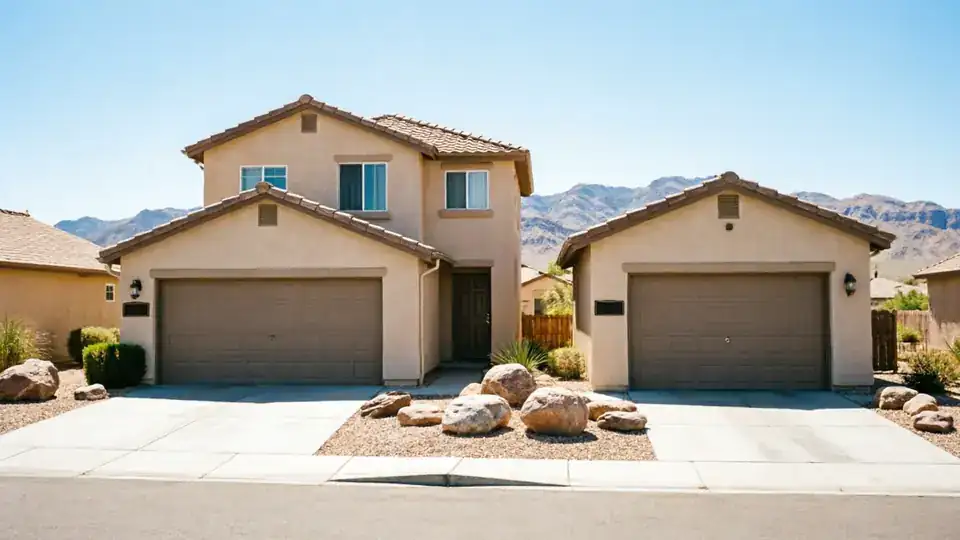
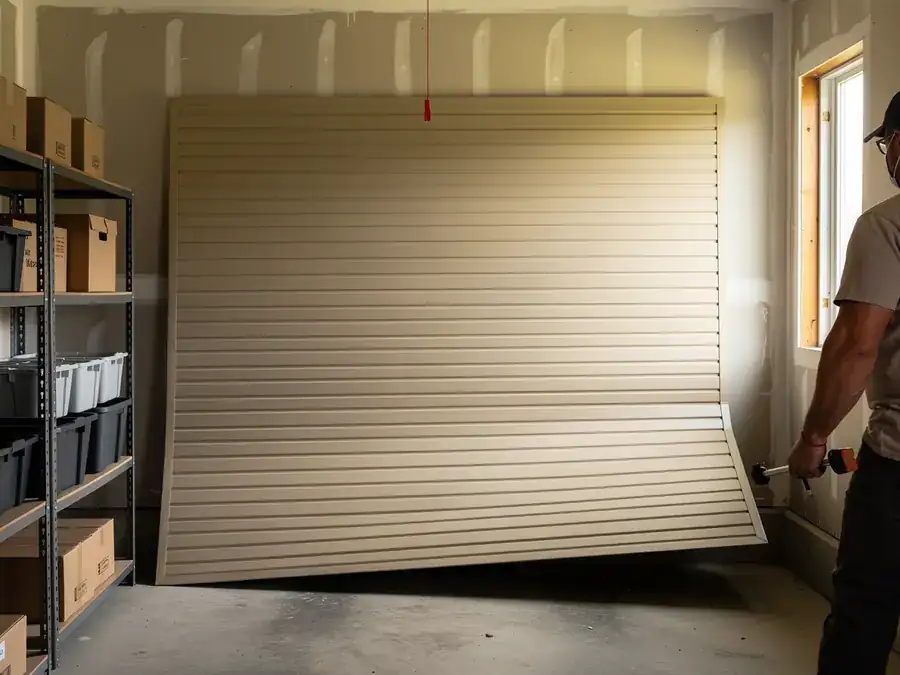
Fast help for broken springs, stuck openers, and off-track doors on Sacaton's early-1990s homes. We travel from Chandler, about 15 miles out, for same-area service.
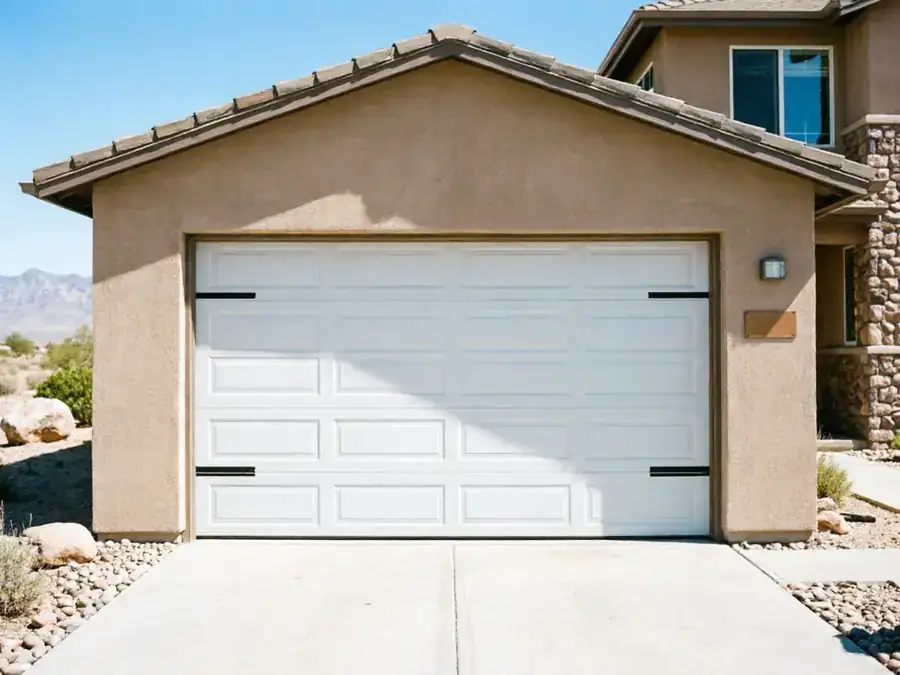
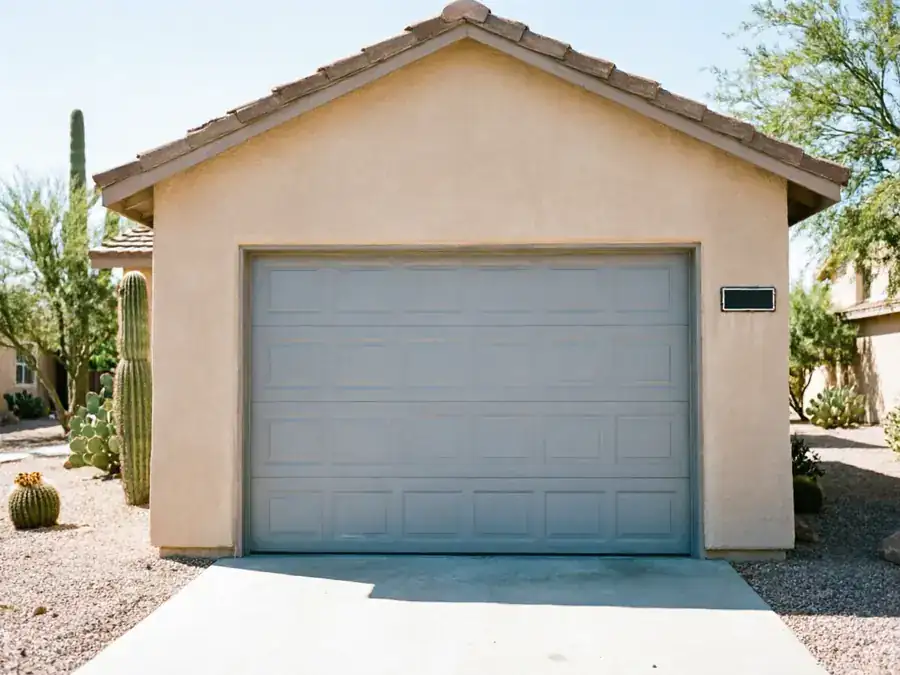
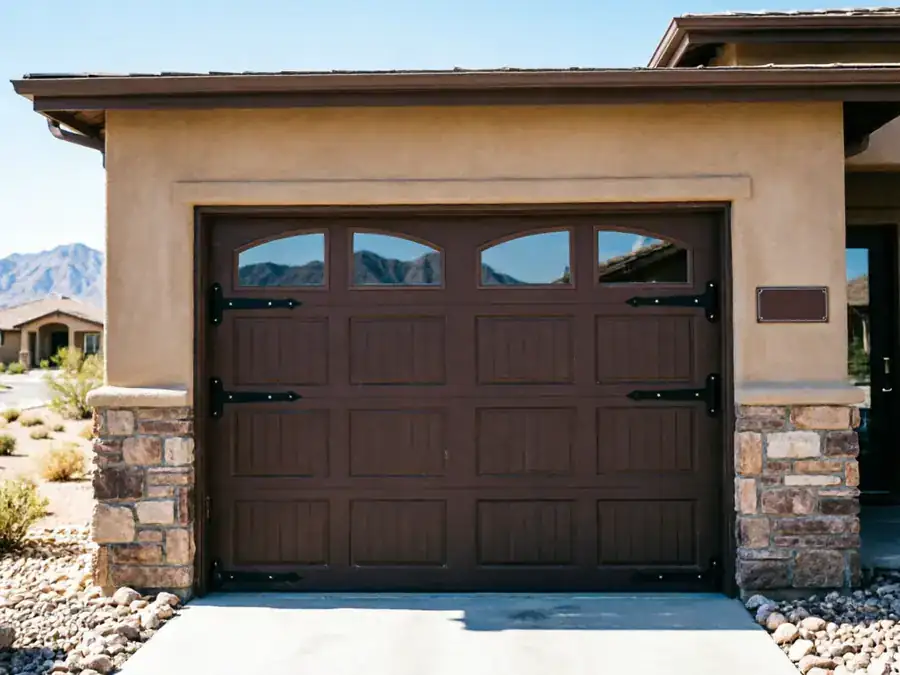
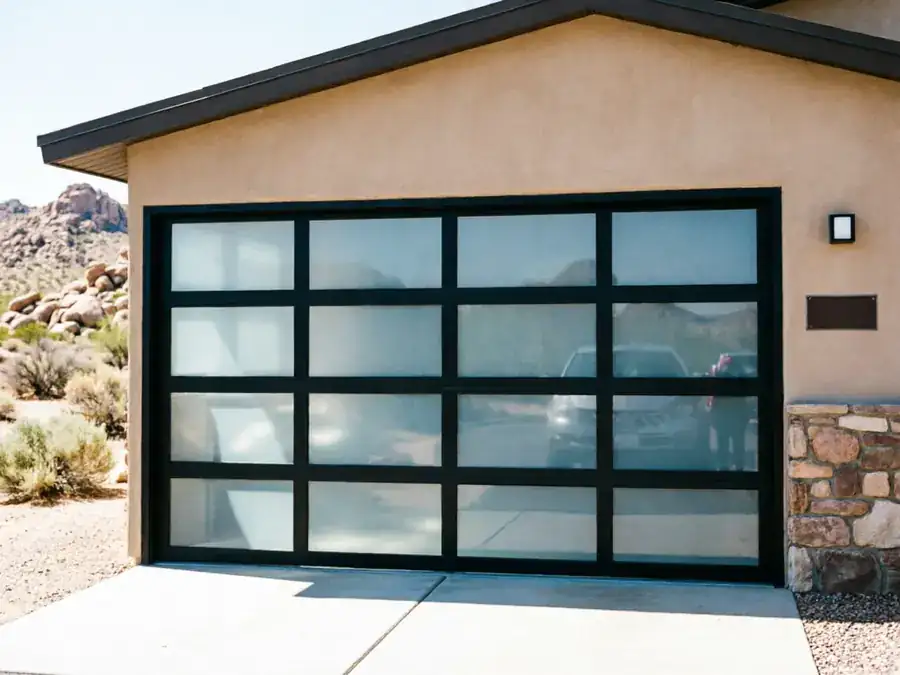
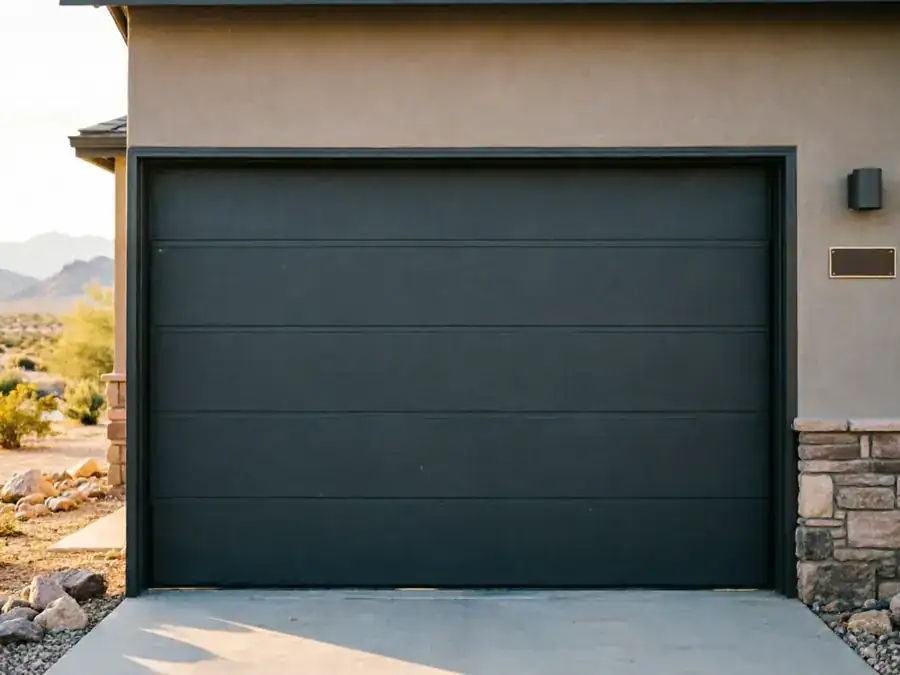
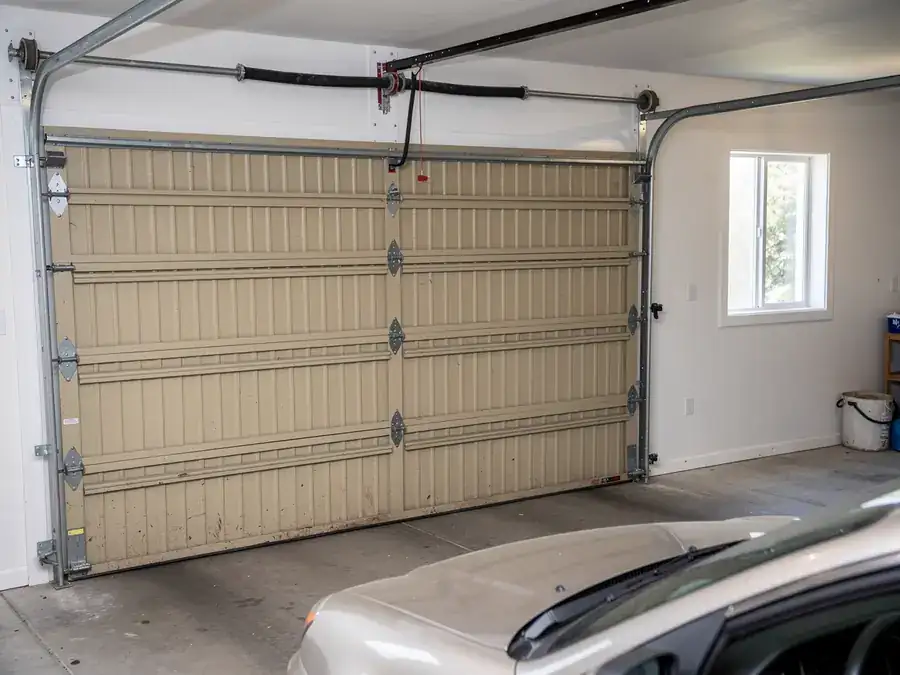
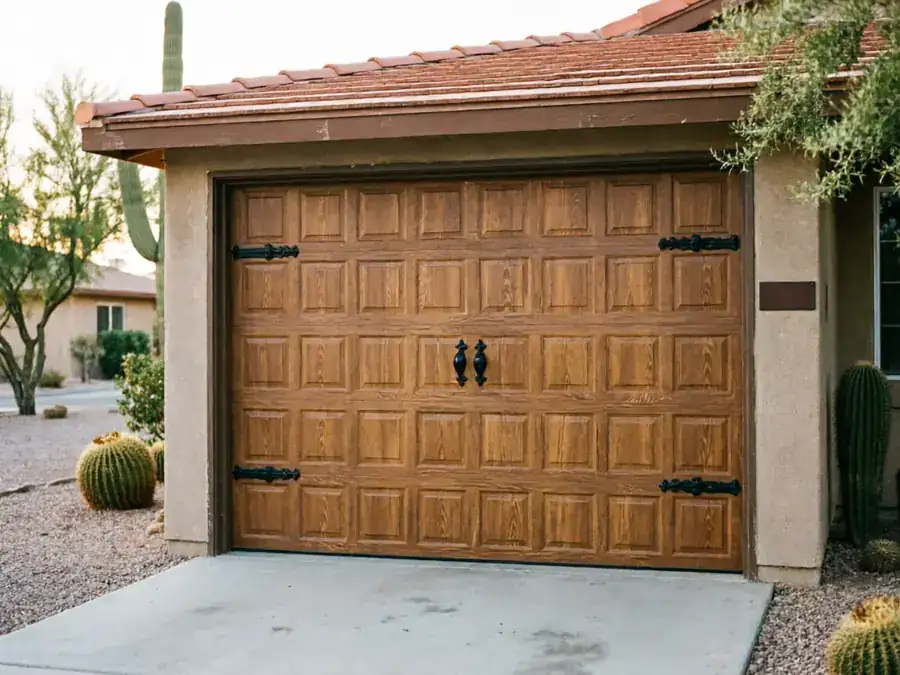
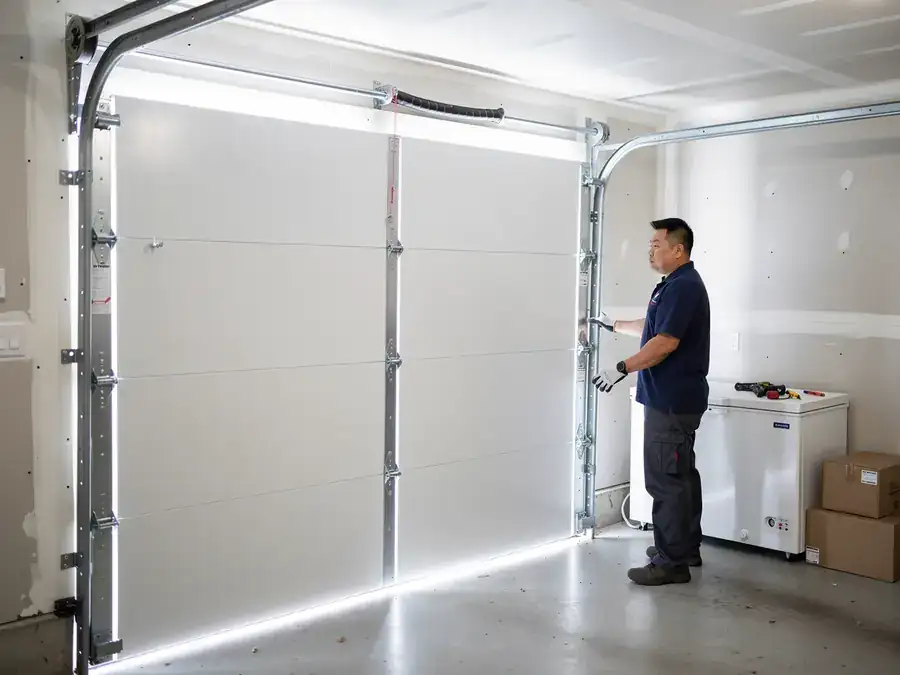
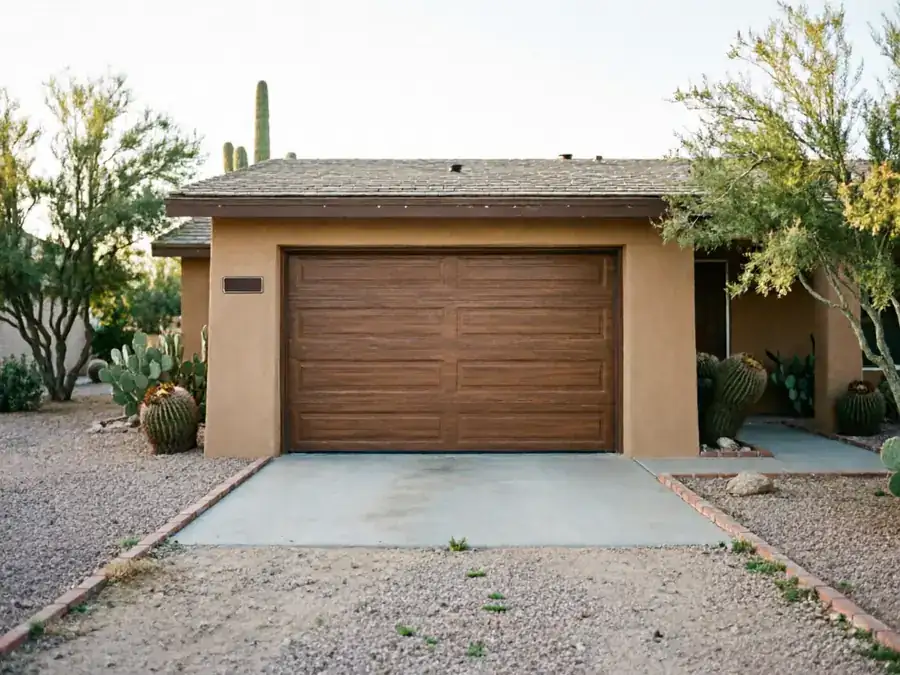
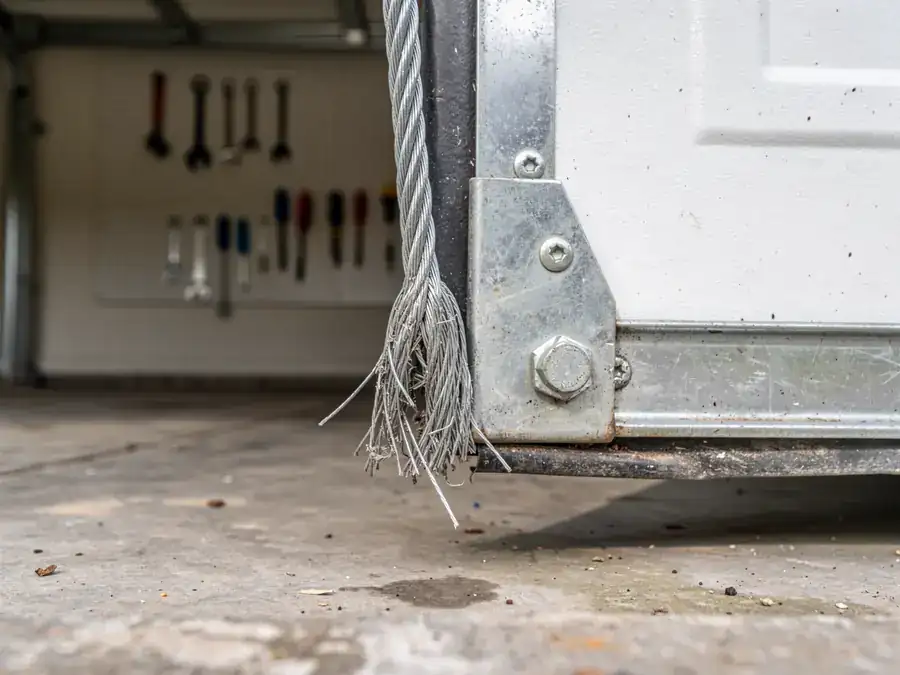
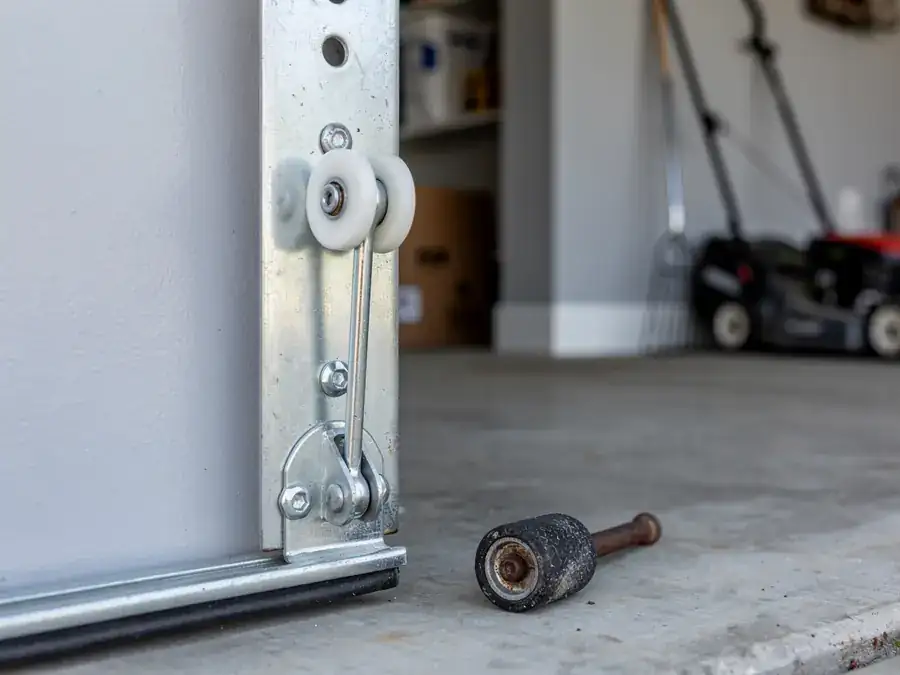
Most houses in this part of Sacaton went up in the early 1990s, with the area's housing stock centered around 1993 - right in line with the broader 1985-1993 build window across this part of the service area. That means steel sectional doors on standard-lift torsion or extension hardware, usually a single 16x7 for the two-car bay or a 9x7 for a single garage. Nothing exotic, but thirty-plus years of Arizona heat does real damage to these doors: dried-out rollers, brittle plastic idler bearings, and torsion springs that have taken more heat-cycles than their rating ever accounted for. A severe-heat climate band isn't a marketing line here - it's why the galvanizing on an original spring looks chalky and why nylon rollers crack instead of wearing smooth. The fix usually means replacing the spring and hardware as a set rather than patching one part, since a 30-year-old door rarely has a single point of failure. We bring springs sized for standard sectional doors of this era and swap worn rollers and cables in the same visit when the track shows it. What we don't do is try to make a cracked, sun-brittle panel last with glue or clamps - if the door itself has gone brittle, that's a replacement conversation, not a repair one.
Booking a Visit
We run out of Chandler, about 15 miles from Sacaton, so when you call we're scheduling a drive, not dispatching from around the corner. That's worth knowing upfront: we don't keep a branch or a truck staged in Sacaton, and we won't tell you otherwise. What we can do is get a tech on the road with the parts a 1990s-era door typically needs - standard torsion springs, rollers, cable, and common opener parts - so the visit covers the repair in one trip instead of two. Tell us the door size and roughly how old the opener is when you call; it saves time once the truck is moving.
The Symptom
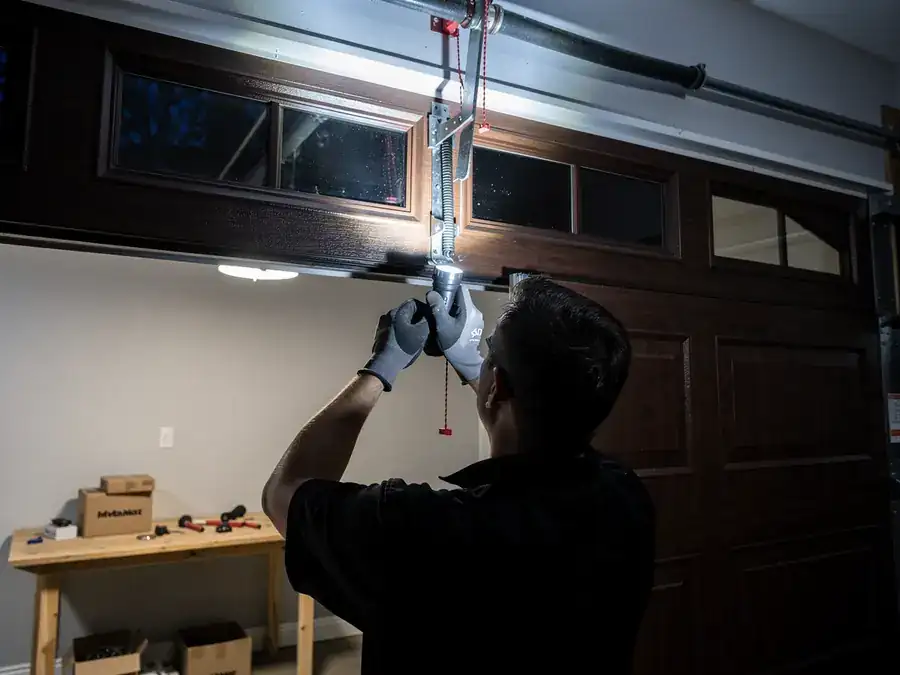
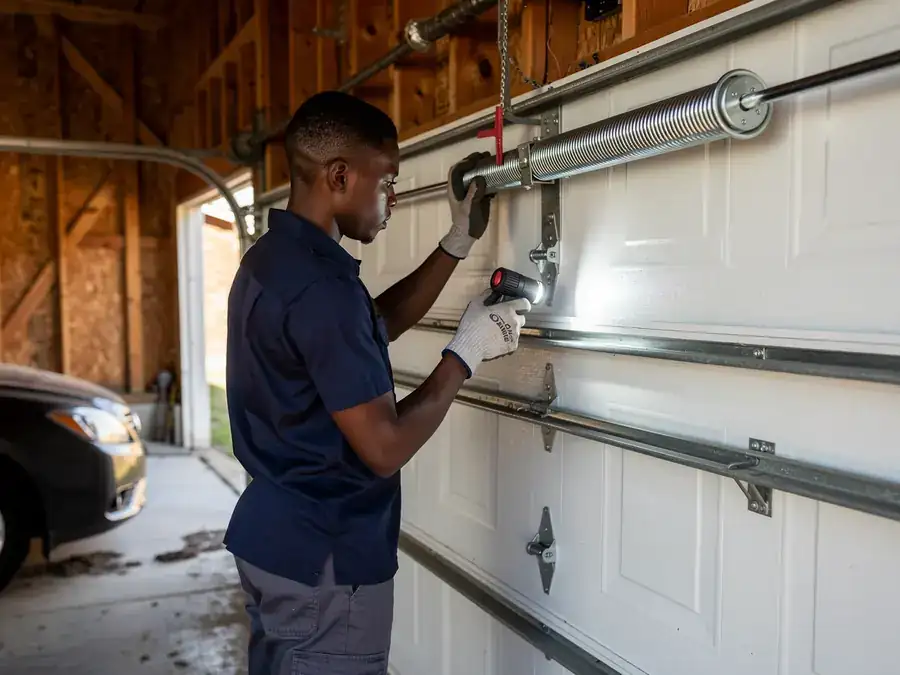
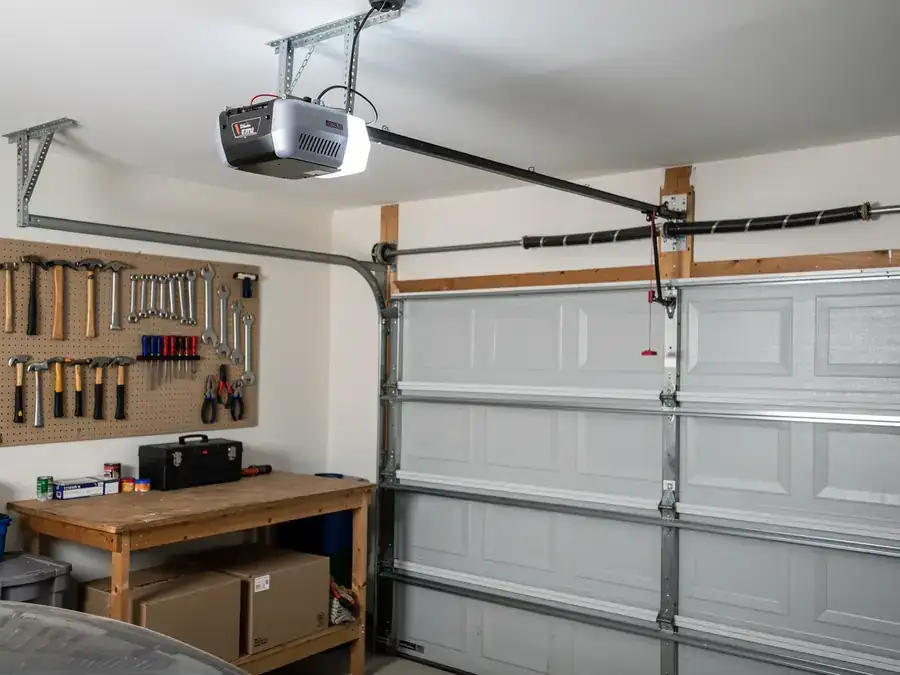
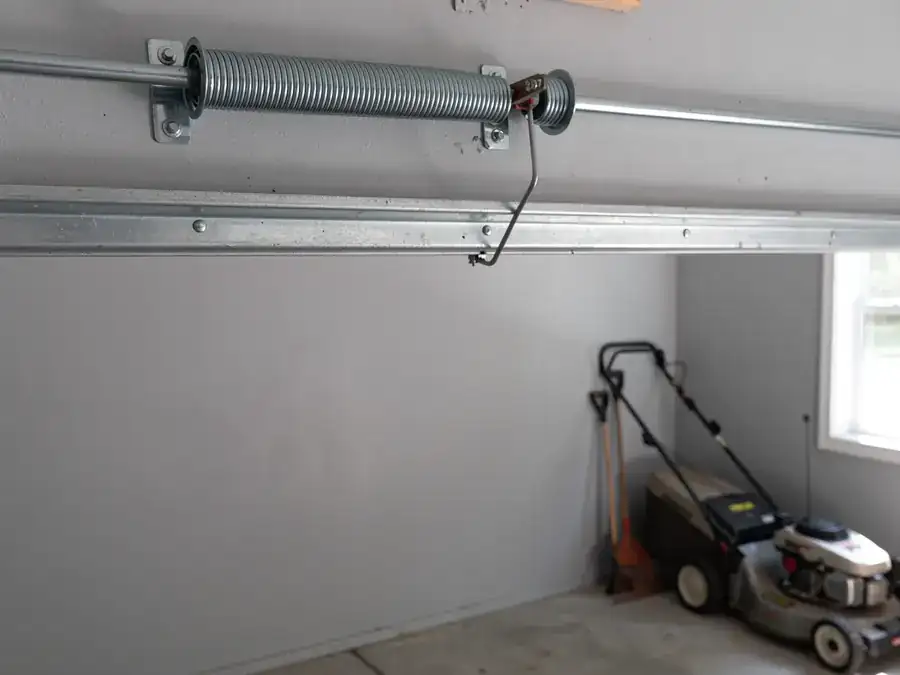
The calls we get from this stretch of Sacaton follow a pattern tied to the housing age. A door that won't budge and makes a loud bang first is almost always a broken torsion spring - common on doors original to houses built around 1991-1993, since springs are rated in cycles and that's about how long a stock spring lasts under daily use and desert heat. A door that opens a few inches and reverses is usually a sensor knocked out of alignment or a travel-limit setting that's drifted, both common on openers from this same era that have never been re-calibrated. A door that's heavy to lift by hand, or slams down fast, points to a spring that's lost tension rather than snapped outright - still dangerous, worth a call before it fails all the way. None of these are wait-and-see problems; a spring under tension that lets go can take fingers or crack a windshield parked underneath.
Doing It Yourself
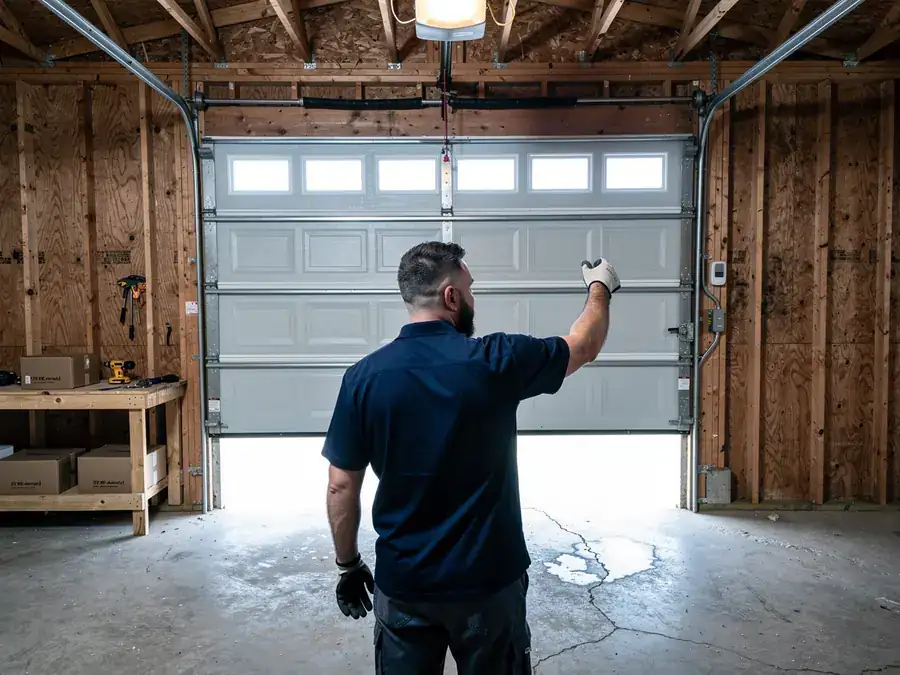
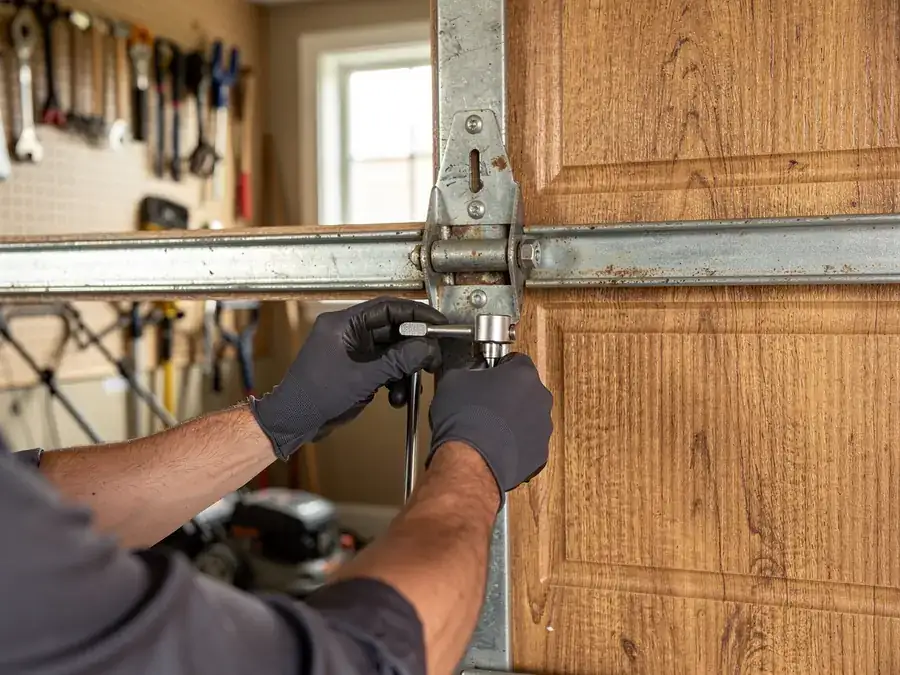
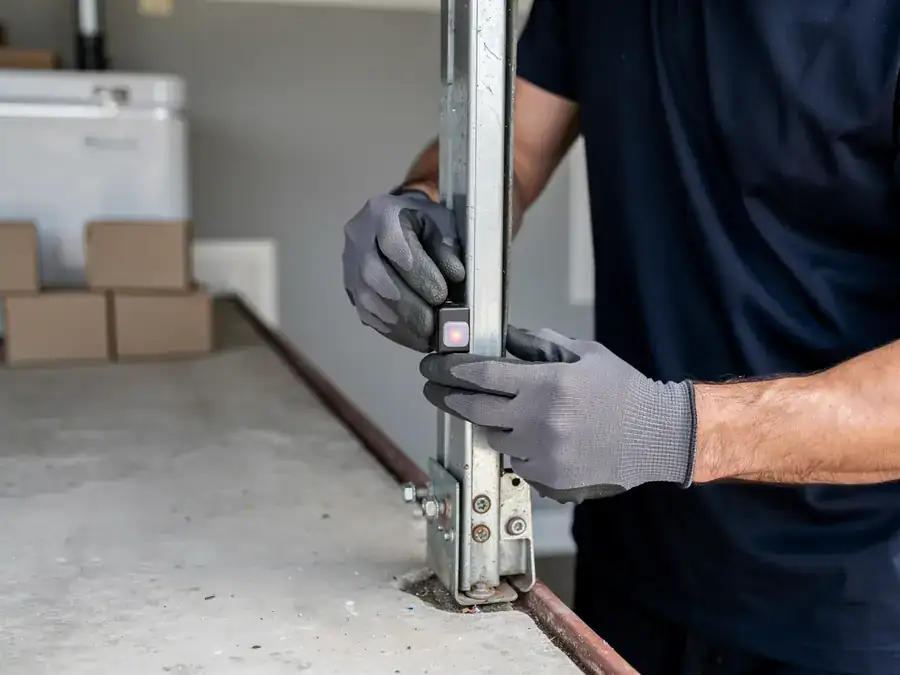
A torsion spring holds enough stored force to seriously injure someone who doesn't have the right bars and doesn't know the turn count for the spring size - this is not a project for a Saturday with a ladder and a wrench, and we'd rather tell you that than sell you a service call for something you could safely do yourself. What you can check before calling: make sure the door is disconnected from the opener (pull the red release cord) and see if it moves smoothly by hand when lifted a few inches - if it's heavy or crashes down, that's spring tension, leave it alone. You can also clear the photo-eye sensors near the floor on each side of the track; dust or a spider web is enough to stop a door from closing on an older opener. Tightening loose roller brackets or hinges with a wrench is reasonable if the door is down and disconnected. Springs, cables, and anything involving the torsion bar overhead - leave those to a tech with the right tools.
The Cost of This Job
We don't have a posted price list for this page, and quoting a number without seeing the door - spring size, bar length, whether the drum or cable needs replacing too - would be a guess dressed up as a fact. What we can say is that the parts common to doors built around 1993 are standard sizes, not specialty items, which keeps the job from turning into a long parts search. If you want a real number, the fastest path is a call describing the door and the symptom; we'll give you a quote before any work starts, not after.
How it works
From “it’s stuck” to “it’s fixed”
A quick, honest process - no guesswork and no surprises.
1
Tell us what’s wrong
Describe the symptom - won’t open, loud bang, opener runs but the door won’t move.
2
On-site diagnosis
A technician tests the door under power and by hand and finds what actually failed.
3
Clear, up-front plan
You get the fix that’s needed and what drives the cost - before any work starts.
4
Repaired & tested
The repair is done, the door is set true and tested, and the work area left clean.
Not sure which repair your door needs in Chandler, AZ? Describe what it’s doing - every job starts with a diagnosis.
Straight answers about garage door repair in Chandler. Still unsure? Ask us directly.
Why does the hardware on my Sacaton garage door keep failing even though I don't use it that much?
It's less about use and more about age and heat. Doors in this part of Sacaton are mostly original to houses built in the early 1990s, so the springs, rollers, and bearings have had three decades of severe summer heat working against them regardless of how many times the door actually cycles.
Do you have a crew based in Sacaton for faster response?
No. We run out of Chandler, roughly 15 miles away, and travel to Sacaton for calls. We're upfront about that distance rather than implying a local branch that doesn't exist.
Is it worth repairing a door this old or should I replace it?
Depends on the panel, not just the hardware. Springs, rollers, and cables are straightforward swaps on a door from this era. If the panel itself is cracked or sun-brittle, patching it rarely holds, and replacement ends up cheaper over time than repeat repair calls.
What's the most dangerous DIY mistake on these older doors?
Trying to adjust or replace a torsion spring without the right bars or turn count. These springs hold heavy stored tension, and on a door this age the spring has already outlived its rated cycles, making it less predictable, not more.