Serving Chandler, AZ & nearby
(928) 403-7175
Chandler, AZ

Is Your Chandler Garage Door Worth Repairing, or Time to Replace It?

Most Chandler homes date to 1985-1993. Here's how the heat here ages that original hardware, and how to tell if your door's still worth repairing or not.

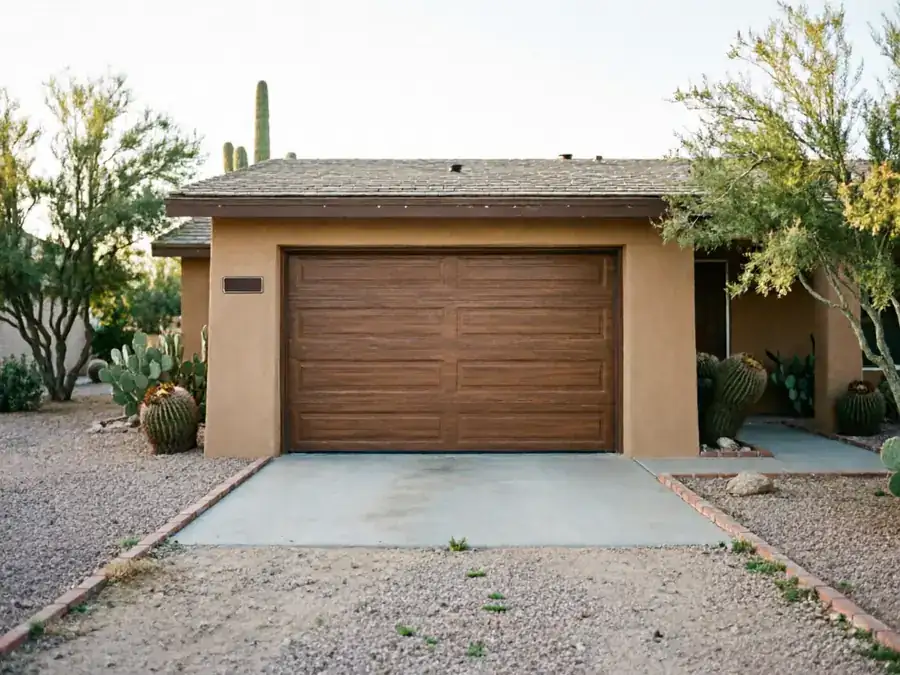
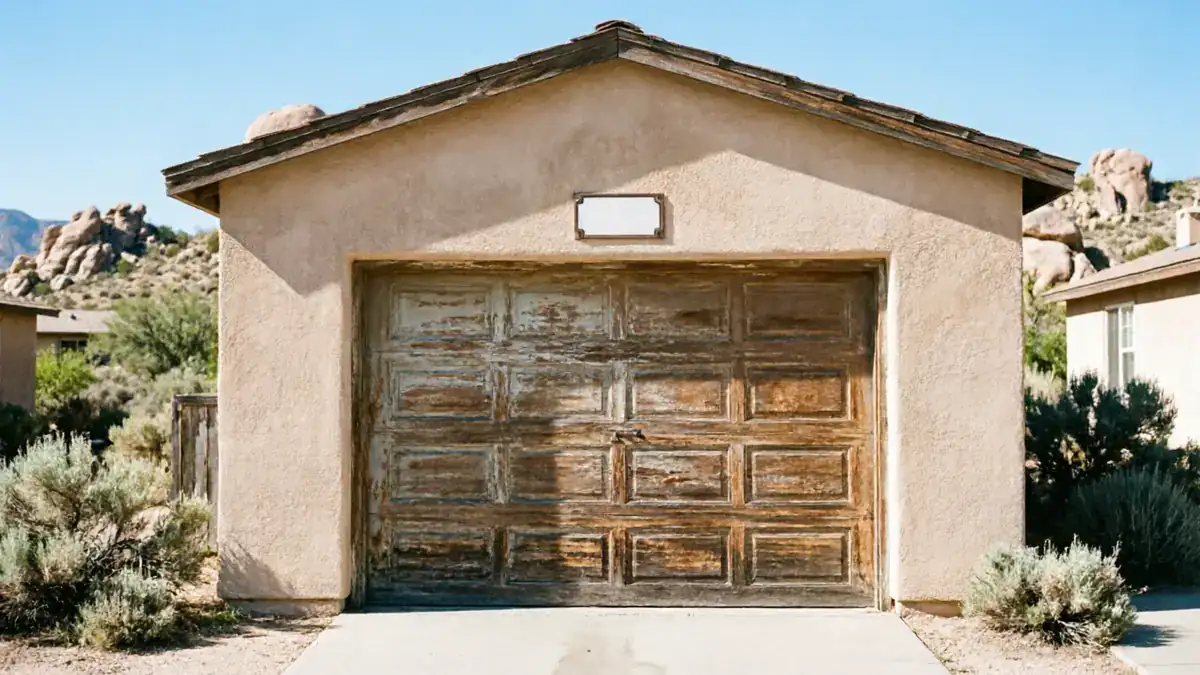
A stucco garage with a weathered wooden garage door and a blank sign above it.

What the Weather Here Does to It

Most houses across this service area, including the stretch around three miles south four miles northeast, were built between 1985 and 1993. That means the garage door hardware on a lot of these homes is original, or close to it, and it's spent thirty-plus summers in a severe heat band. Steel expands and contracts every single day here, not just on the hottest week of August. That cycling loosens hinge screws, dries out factory lubricant on rollers and hinges faster than it would in a milder climate, and breaks down the oil inside torsion springs that were wound for average use, not decades of 110-degree cycling.

The panels themselves usually hold up fine if they're steel. What gives out first is almost always a moving part: the spring, the rollers, or the opener's drive components. If your door is sticking, groaning, or closing crooked and your house falls into that 1985-1993 build window, the heat is probably the reason, not bad luck.

The Problem

A torsion spring installed when a Chandler house was built in, say, 1988 was rated for a certain number of open-close cycles under normal conditions. Three decades of severe summer heat shortens that lifespan because heat accelerates metal fatigue and dries out the lubricant that's supposed to protect the coil. By the time a spring from that era snaps, it's usually been weakening quietly for years, not failing out of nowhere.

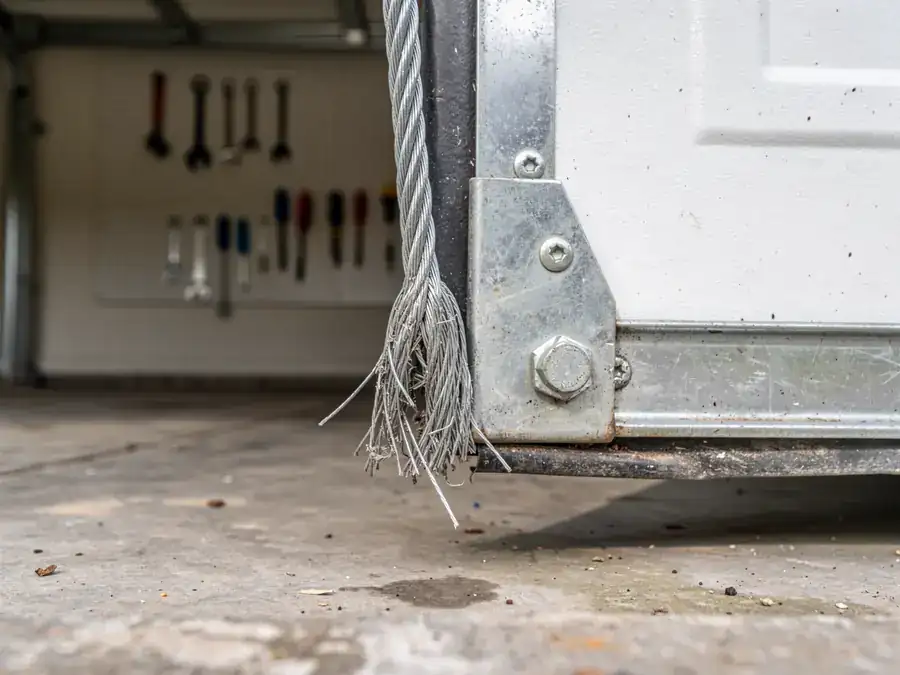
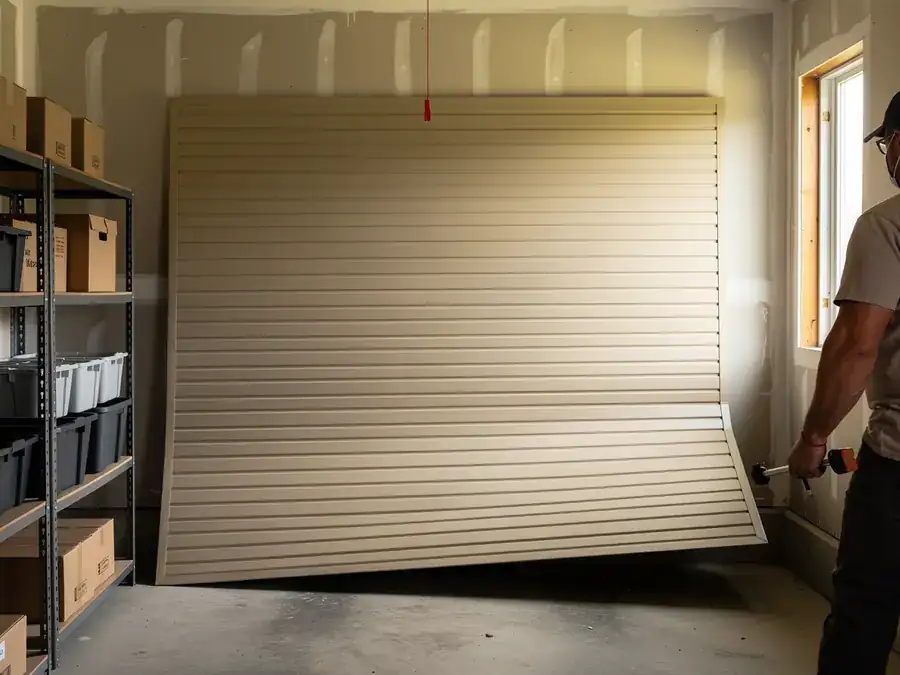
The same goes for galvanized hardware, cables, and the nylon rollers that were standard on doors built in that 1980s-90s window across the four main pockets of housing in this area. None of that is a defect. It's just thirty years of this specific climate doing its job on parts that were never meant to last forever. The honest limitation here: if the spring has already snapped and taken a cable or the bottom bracket with it, that's no longer a quick fix, and treating it like one risks the door coming down wrong a second time.

What to Check

  1. Start with the spring

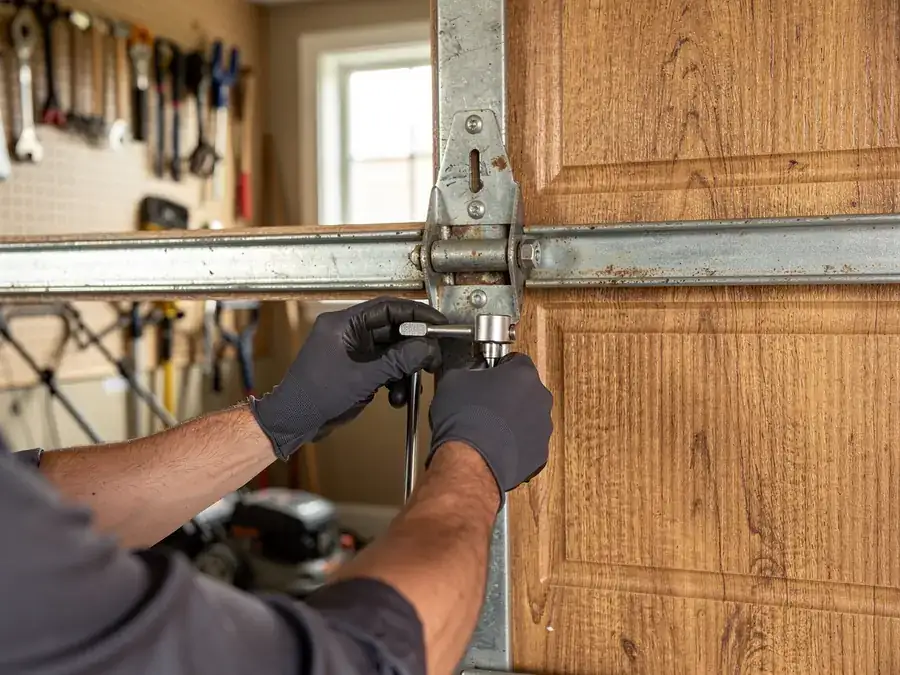
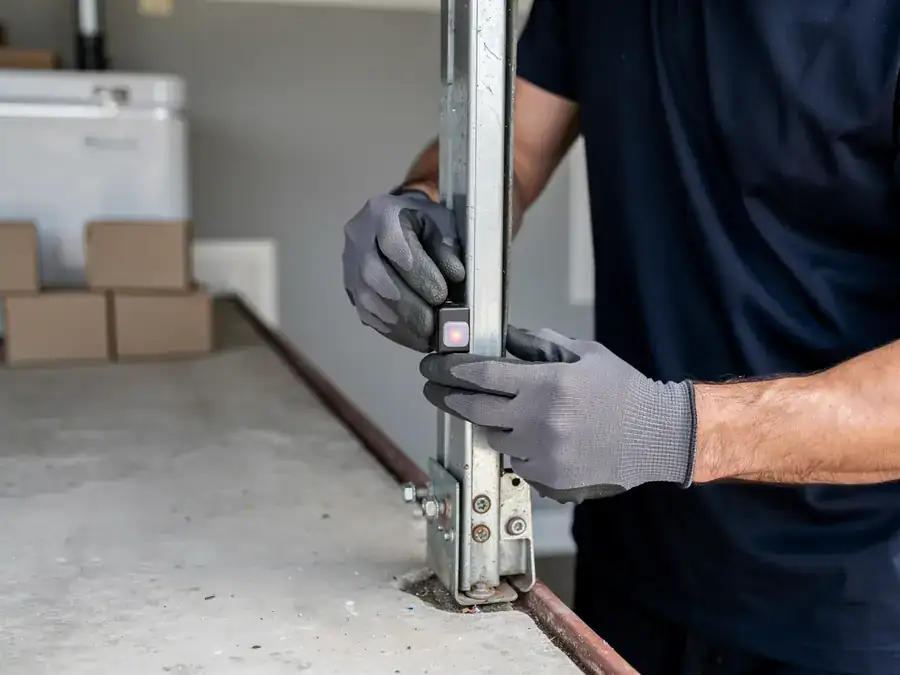
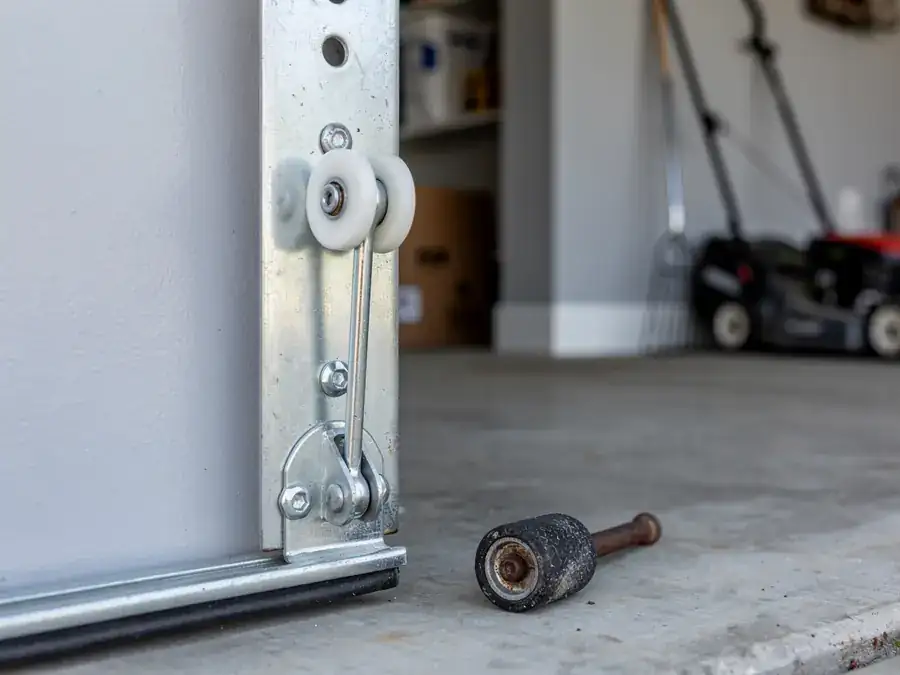
    If it's the original to a house built in that 1985-1993 stretch, look for rust pitting or a visible gap in the coil when the door is down. Next, check the rollers: if they're the hard nylon or steel type common to that era's standard installs, listen for grinding rather than a smooth roll. Track alignment matters too. Decades of heat cycling can shift the studs holding the track to the frame, especially on the older stucco-and-wood-frame construction typical of houses in this area.

  2. Check the opener's age against the house

    A lot of these 1980s and 90s builds have had the opener replaced once already, sometimes twice, while the door and track are still original. If the opener is newer than the springs and track, that tells you where the weak point actually is. None of this requires tools beyond a flashlight and a ladder, but a cable under tension is not something to test by hand.

Where People Go Wrong

The most common mistake is replacing the opener and assuming that fixes the door. An opener swap does nothing for a thirty-year-old spring or a track that's drifted out of alignment from heat expansion. The door will open, for a while, then put more strain on the parts that were already worn.

The other mistake runs the other direction: owners replace a snapped spring and stop there, when the cable or roller that failed alongside it was just as old and just as fatigued. With median household income at $63,545 across the roughly 32,281 households in this area, a lot of people are weighing a spring repair against a full replacement, and that's a fair call to make. But it should be made with the actual condition of the door in front of you, not a guess. If the door is original to a house from that 1985-1993 window and more than one system is failing at once, replacement usually ends up cheaper than a string of repairs.

How it works

From “it’s stuck” to “it’s fixed”

A quick, honest process - no guesswork and no surprises.

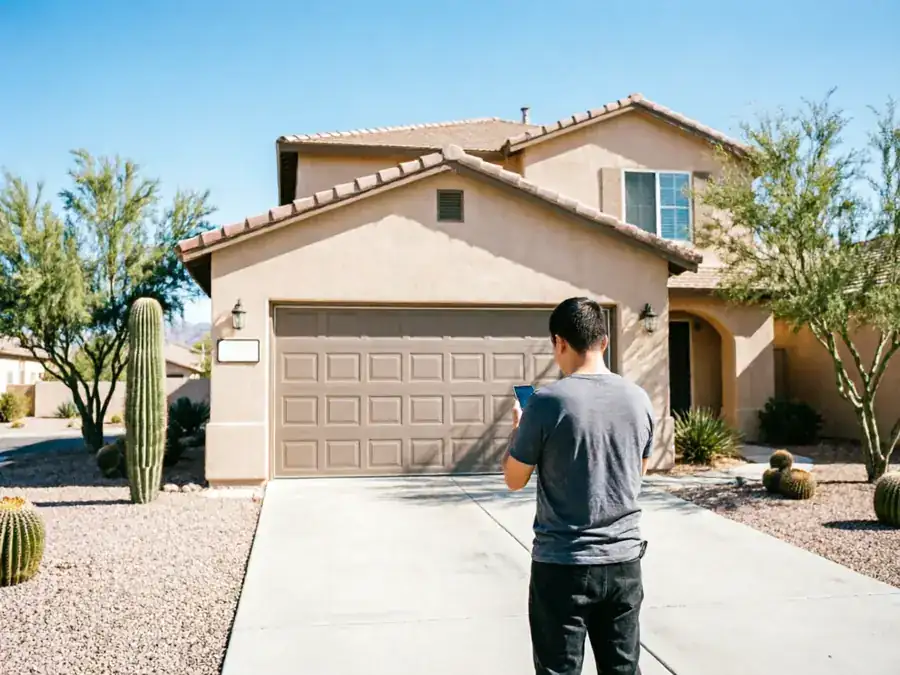
  1. A man stands in a driveway, looking at his phone, facing a closed garage door.
    1

    Tell us what’s wrong

    Describe the symptom - won’t open, loud bang, opener runs but the door won’t move.

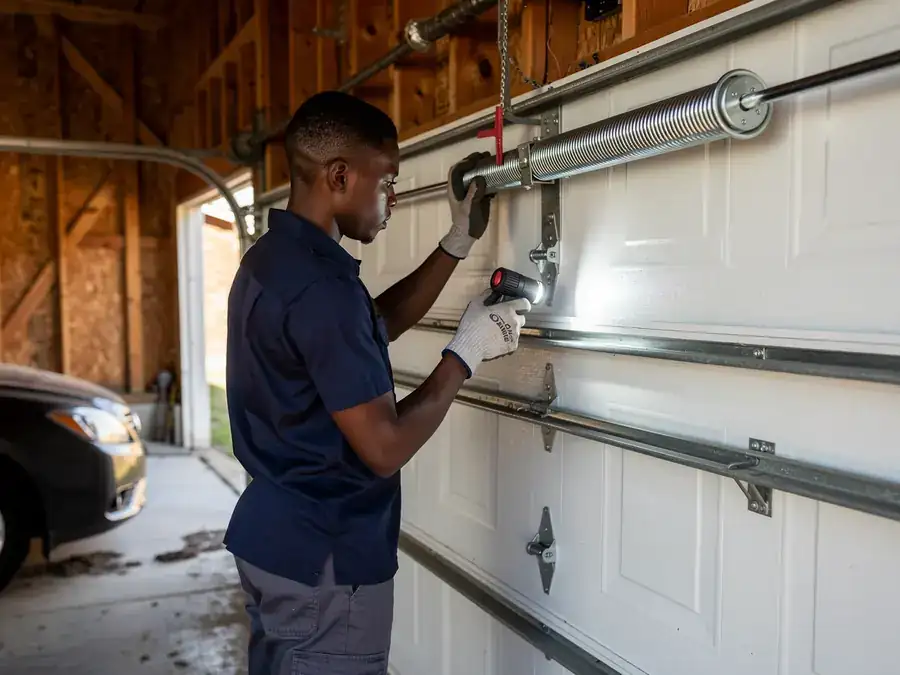
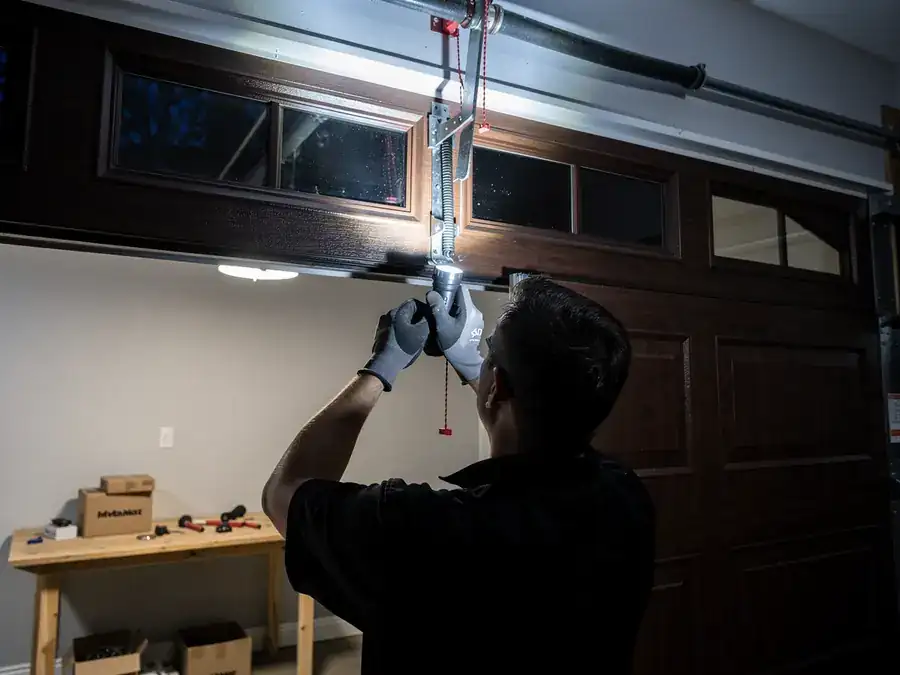
  2. A technician inspects a garage door torsion spring with a flashlight.
    2

    On-site diagnosis

    A technician tests the door under power and by hand and finds what actually failed.

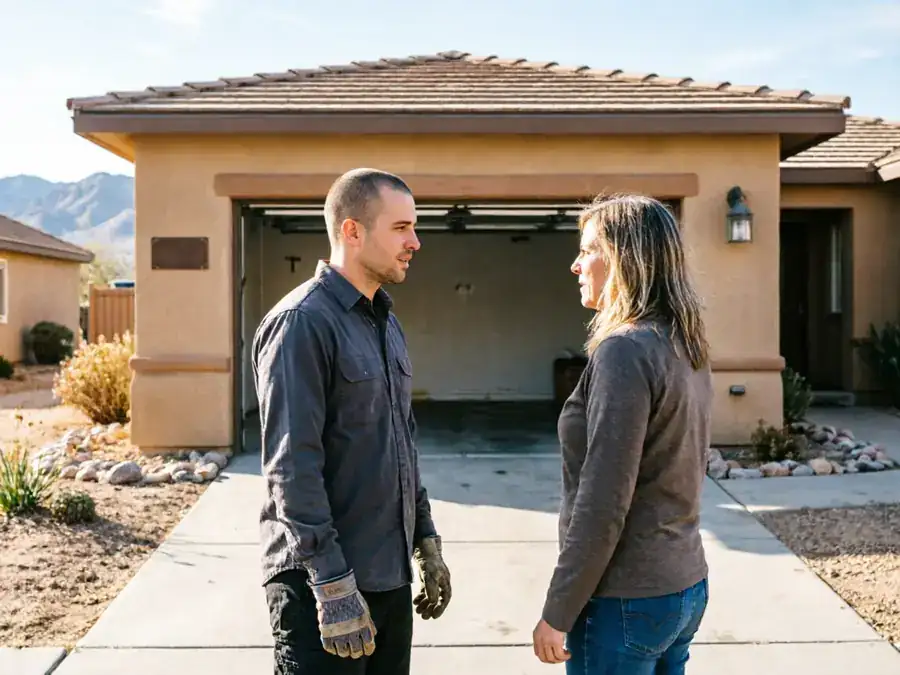
  3. A technician and a woman stand in a driveway in front of a garage.
    3

    Clear, up-front plan

    You get the fix that’s needed and what drives the cost - before any work starts.

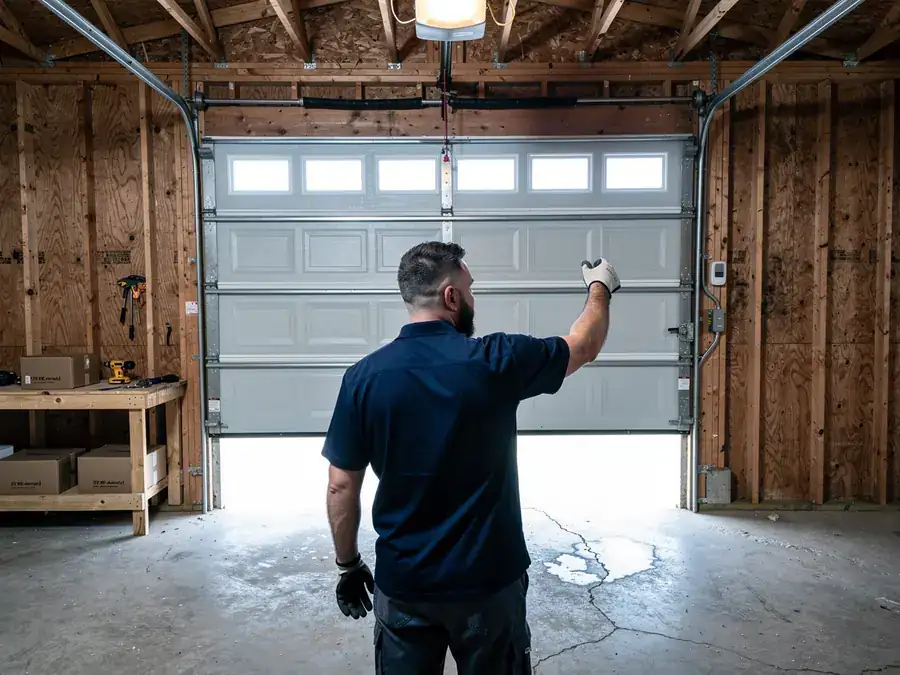
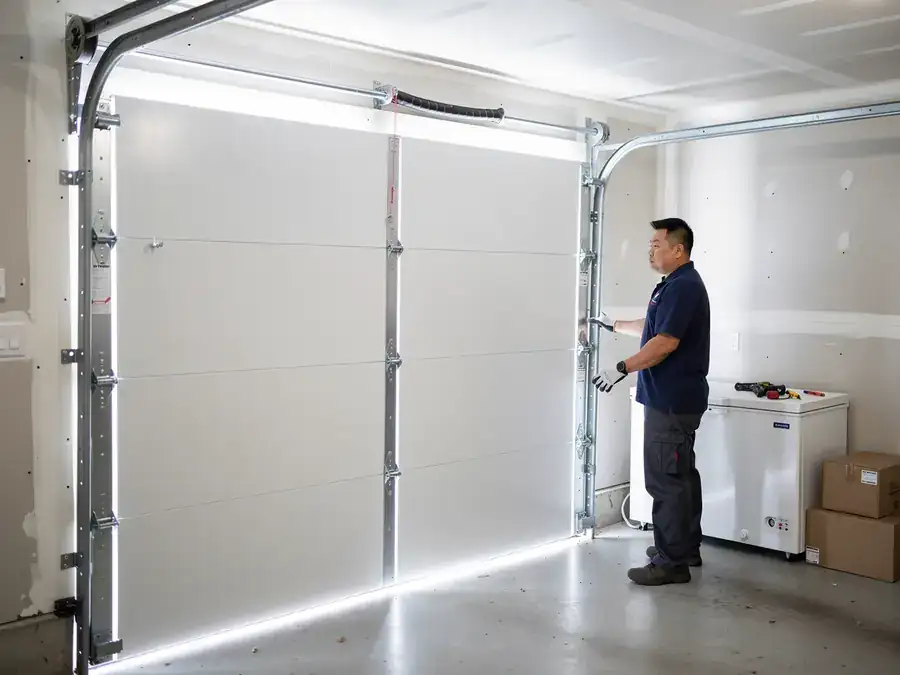
  4. A technician stands in a garage looking at an open garage door.
    4

    Repaired & tested

    The repair is done, the door is set true and tested, and the work area left clean.

Not sure which repair your door needs in Chandler, AZ? Describe what it’s doing - every job starts with a diagnosis.

How we work

What to expect

Diagnosis firstEvery visit starts by finding what actually failed - not a pre-written parts list.
The right part for the doorSprings and openers matched to the door’s weight and age, so the fix holds up.
Straight answersWhen a repair makes more sense than a replacement - or the reverse - you hear it plainly.
Clean, careful workTension released safely, hardware set true, the door tested under power before we leave.
What we do

Garage Door Services

Repair and installation work for Chandler homes and businesses.

Questions

Frequently asked

Straight answers about garage door repair in Chandler. Still unsure? Ask us directly.

My house was built in the early 90s. Is my garage door original?

A lot of houses in this area date to that 1985-1993 window, and plenty still have original torsion springs and track. Check for rust pitting on the spring coil and listen for grinding in the rollers. If neither has been replaced, assume it's original and treat it as thirty-plus years into a climate that wears hardware fast.

Does the heat here really affect garage door springs that much?

Yes. This area sits in a severe heat band, and daily steel expansion and contraction fatigues torsion springs faster than in milder climates. A spring rated for a normal cycle count can wear out sooner here, especially if it's the original one from a house built in the 1980s or 90s.

How do I know if it's cheaper to repair or replace?

If only one part has failed, like a single spring or a roller, repair usually makes sense. If the spring, cable, and track are all original to a house from the 1985-1993 era and more than one is showing wear, replacement often costs less over time than repeated repairs on the same aging hardware.

Ready to get your garage door sorted?

Tell us what it’s doing and where you are in Chandler - we’ll take it from there.

Request a QuoteCall