Openers, Power Cuts, and the Heat Chandler Puts on Both
Chandler homes built 1985-1993 run openers through punishing summer heat. Here's what fails first, what to check, and where owners go wrong on power cuts.
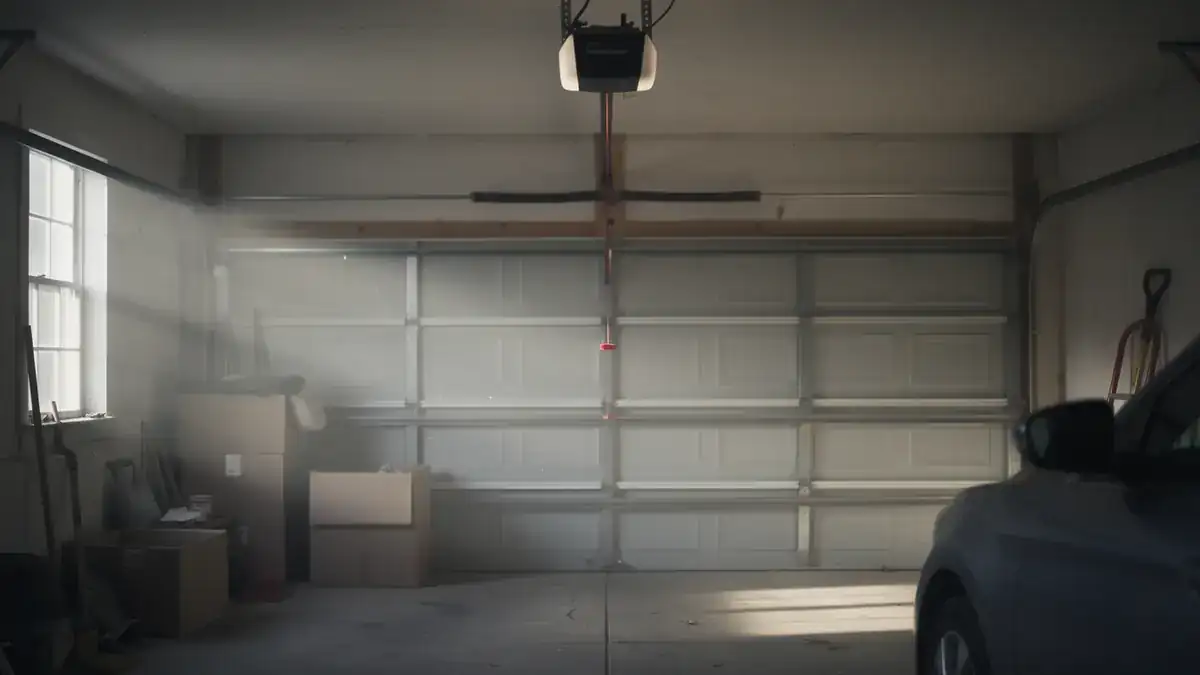
Most houses in this service area went up between 1985 and 1993, with 1991 sitting right in the middle. That means a lot of original or first-replacement openers are chain or belt drive units built before manufacturers took Arizona heat seriously in their circuit board design. Severe summer heat here does two things to an opener: it cooks the capacitors and relays inside the logic board faster than in a mild climate, and it swells and dries out the rubber belt or chain tensioner on units already pushing 20-30 years old given the housing stock's age. When the power cuts out mid-afternoon during peak load, which it does in this kind of heat band, the opener doesn't just lose power cleanly. Surge and brownout cycles as the grid recovers are harder on a board than a straight outage, and older boards from the 1990s-era housing wave weren't built with the surge protection you'd expect in a newer unit. If your opener is original to a house built in that window, the heat has already been working against it for three decades.
The Problem
A power cut doesn't just stop the opener - it can scramble the logic board's memory of where the door's limits are, or trip a breaker that doesn't reset itself. In a house from the 1985-1993 wave, the opener circuit is often on a shared garage outlet with little else drawing power, so a cut there usually means a neighborhood-wide event, not a local overload. The real problem is what happens after: the door comes back on, but the travel limits are off, so it reverses early or slams the floor. On older chain-drive units common in this stock, the capacitor that gives the motor its starting torque is also the part most likely to fail outright after repeated heat-cycle stress, and that failure often shows up right after a power event, not during it. Replacing a board on a unit this old is sometimes not worth it - parts for openers from that era are getting hard to source, and a new opener with better surge handling costs less than a specialty board replacement in most cases.
What to Check
After any outage, don't just hit the remote and assume it's fine. Pull the manual release cord and run the door by hand first - if it's hard to lift or doesn't stay where you leave it, the spring took the hit, not the opener, and that's a separate job. If the door moves freely by hand, check the wall button: a short blink pattern or steady light with no response usually means the board lost its memory and needs a reset per the manual, not a replacement. Look at the outlet itself - in houses from this era the garage outlet is often original and GFCI-protected; a tripped GFCI after a surge is common and an easy fix. If the opener runs but the door reverses before it closes, the travel limits need resetting, which takes minutes if the board itself survived. Given the household income and ownership numbers typical of this area, most owners handle the outlet and reset steps themselves and only call when the board is actually dead.
Where People Go Wrong
The most common mistake is assuming a dead opener after a power cut means a dead opener, full stop, when it's often just unset limits or a tripped GFCI that takes five minutes to fix. The second mistake runs the other way: owners nurse along a board that's already failed twice after heat events, replacing capacitors piecemeal instead of accepting that a unit original to a house built in the late '80s or early '90s is past the point where patching it makes sense. Neither extreme serves you. We don't carry parts for every opener model from that era - some boards just aren't made anymore, and we'll tell you that straight instead of ordering a part that takes three weeks to arrive for a problem a new opener solves today.
How it works
From “it’s stuck” to “it’s fixed”
A quick, honest process - no guesswork and no surprises.
1
Tell us what’s wrong
Describe the symptom - won’t open, loud bang, opener runs but the door won’t move.
2
On-site diagnosis
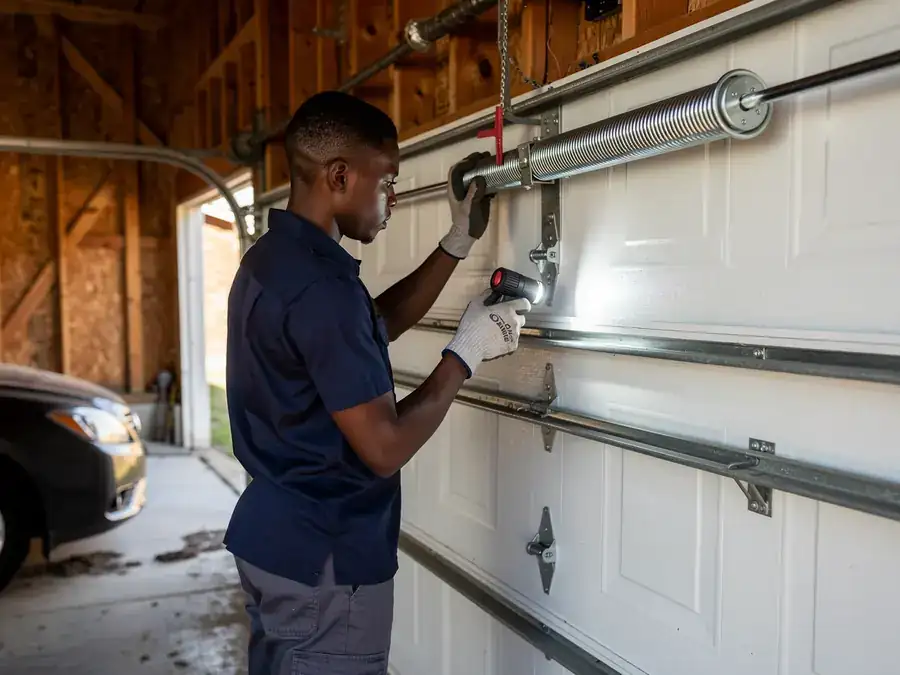
A technician tests the door under power and by hand and finds what actually failed.
3
Clear, up-front plan
You get the fix that’s needed and what drives the cost - before any work starts.
4
Repaired & tested
The repair is done, the door is set true and tested, and the work area left clean.
Not sure which repair your door needs in Chandler, AZ? Describe what it’s doing - every job starts with a diagnosis.
Straight answers about garage door repair in Chandler. Still unsure? Ask us directly.
Why does my opener die every time the power flickers in summer heat here?
Repeated heat-cycle stress on an older board's capacitors makes it more vulnerable to surge damage during a power cut. If your opener is original to a house from the 1985-1993 building wave, that board has had three decades of Chandler summers working against it already.
Can you still get parts for an opener that old?
Not always. Boards for some openers from that era are no longer manufactured. When that's the case, we'll tell you directly rather than order a part that may take weeks, and we'll walk you through whether a new opener makes more sense than waiting.
My door reverses right before it closes after a power cut - is that the opener or the spring?
Check by hand first. If the door lifts smoothly with the manual release, it's almost always the travel limits being scrambled by the outage, not the spring. That's a quick reset, not a repair.