Serving Chandler, AZ & nearby
(928) 403-7175
Chandler, AZ

What Chandler's 1980s-90s Housing Stock Means for Your Garage Door

Most Chandler homes near went up between 1985 and 1993, before current insulation codes. Here's what that means for your door.

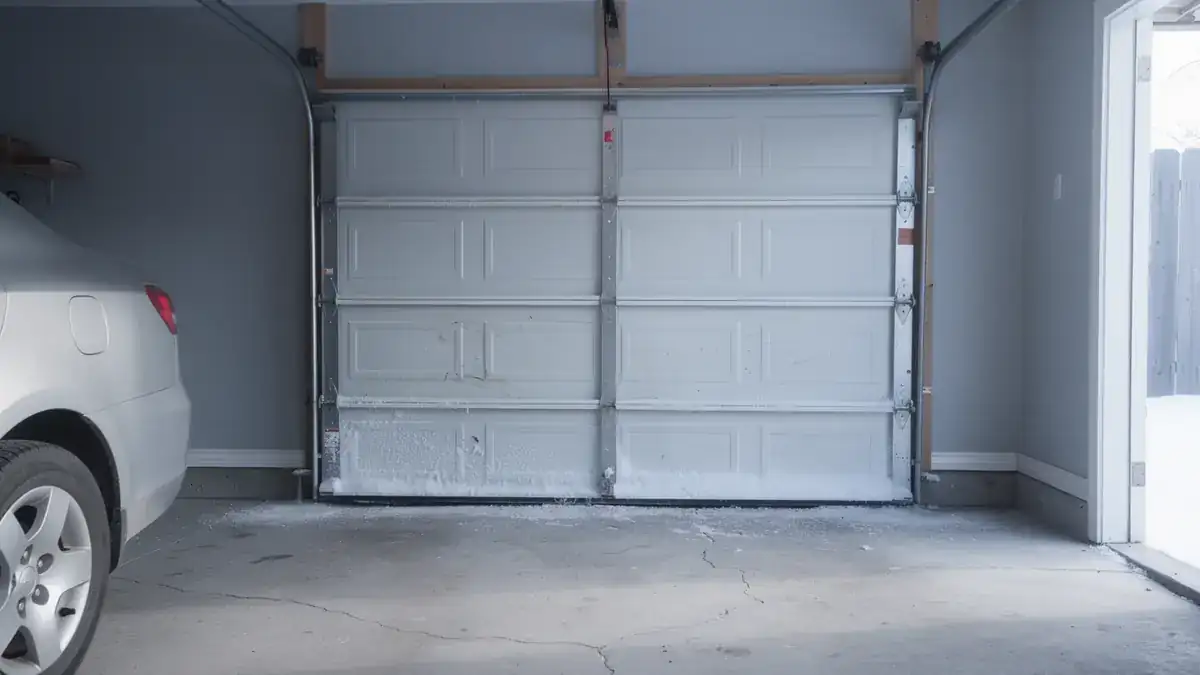
The white garage door is closed with snow and ice at the bottom.

What the Weather Here Does to It

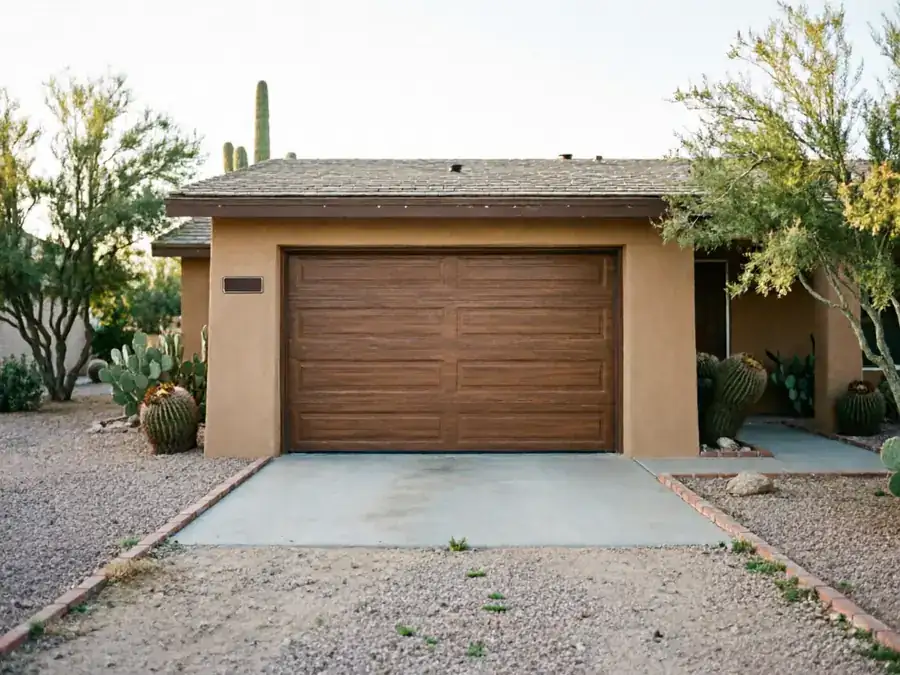
Chandler sits in a severe-heat climate band, and most of the housing stock in this service area went up between 1985 and 1993, with a median build year of 1991. That matters because garage doors from that era were built to the standards of their time, which did not require the insulation values that later codes demanded. A single-skin steel door with no foam core does almost nothing to block summer heat, and in a garage that regularly sits well above outdoor temperature, that heat soaks into the slab, the ceiling joists above, and anything stored against the shared wall. Repeated heat cycling also does something specific to these older doors: it dries out the factory lubricant in the hinges and rollers faster than a newer, better-sealed unit, and it can warp thin steel panels enough that they stop sitting flush in the track. If your house is one of the many in this area built in that 1985-1993 window, your door has likely been through close to three decades of this cycle without ever being upgraded.

The Problem

The core issue on these doors on houses built before insulation rules is that the hardware and the panel were never designed to work this hard. Non-insulated doors expand and contract more than insulated ones, and over thirty summers that movement loosens track bolts, stretches cables incrementally, and fatigues springs faster than their rated cycle count would suggest. Owners usually notice it first as a door that's louder than it used to be, or one that seems to struggle a little more on the last few inches of travel. That's not random wear. It's the predictable result of a door built for a 1991 energy code running in a climate that punishes uninsulated steel every single afternoon. The honest limitation here: insulating an old panel after the fact with foam board or a retrofit kit helps some, but it doesn't fix hardware that's already fatigued, and it won't make a warped panel sit straight again.

What to Check

Start at the panel seams. On a non-insulated door from this era, you can often feel heat radiating off the inside face by early afternoon; if one section feels noticeably hotter or looks slightly bowed compared to the others, that's heat-driven warping, not just age. Check the weatherstripping at the bottom and sides too. Thirty-year-old vinyl gets brittle in this climate and cracks instead of flexing, which lets conditioned air leak straight into the garage. Next, look at the torsion spring. If your house falls in that 1985-1993 build range and the spring has never been replaced, it's well past the point where heat-cycle fatigue becomes a real concern, and a spring that lets go under tension is dangerous, not just inconvenient. Last, check how the door sits when fully closed. Gaps at the corners usually mean the track has shifted slightly over the years, which is common on original hardware that's never been reset.

Where People Go Wrong

The mistake we see most with doors on houses built before insulation rules is treating symptoms one at a time instead of looking at the whole door as a system from the same era. Someone replaces a dead spring, then six months later the opener strains because the rollers are still shot and the door is heavier to lift than it should be. On a door this old, in a climate band this hot, the panel, the hardware, and the seals have all been aging together since the house was built, and they tend to fail in sequence rather than all at once. The other common error is assuming a quick insulation retrofit solves the heat problem on a panel that's already warped or a frame that's already shifted. It won't. If the door is original to a house built in that 1985-1993 window and showing more than one of these issues, it's usually worth having it looked at as a whole rather than chasing one part at a time.

How it works

From “it’s stuck” to “it’s fixed”

A quick, honest process - no guesswork and no surprises.

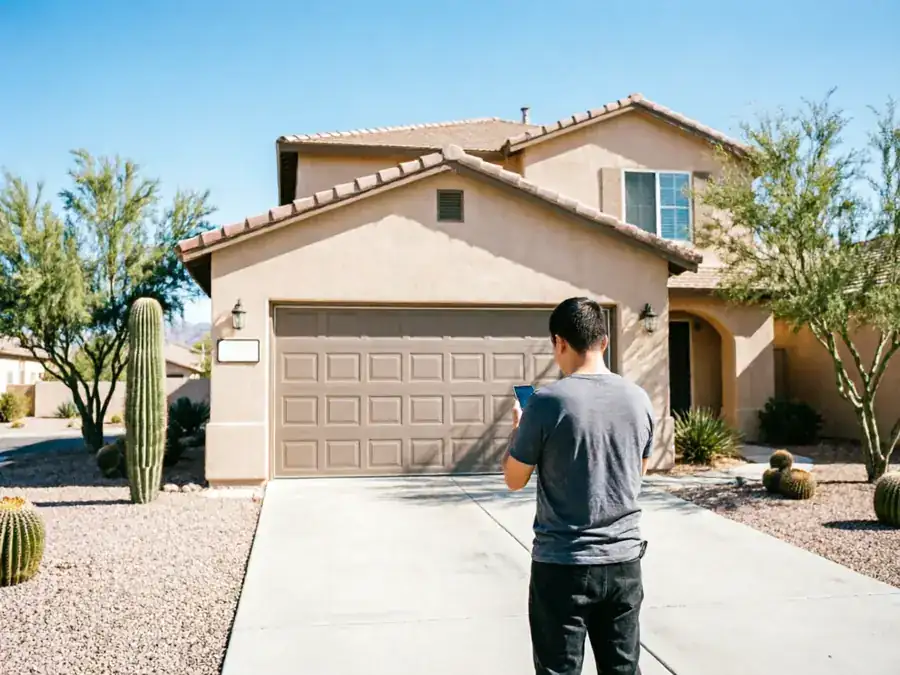
  1. A man stands in a driveway, looking at his phone, facing a closed garage door.
    1

    Tell us what’s wrong

    Describe the symptom - won’t open, loud bang, opener runs but the door won’t move.

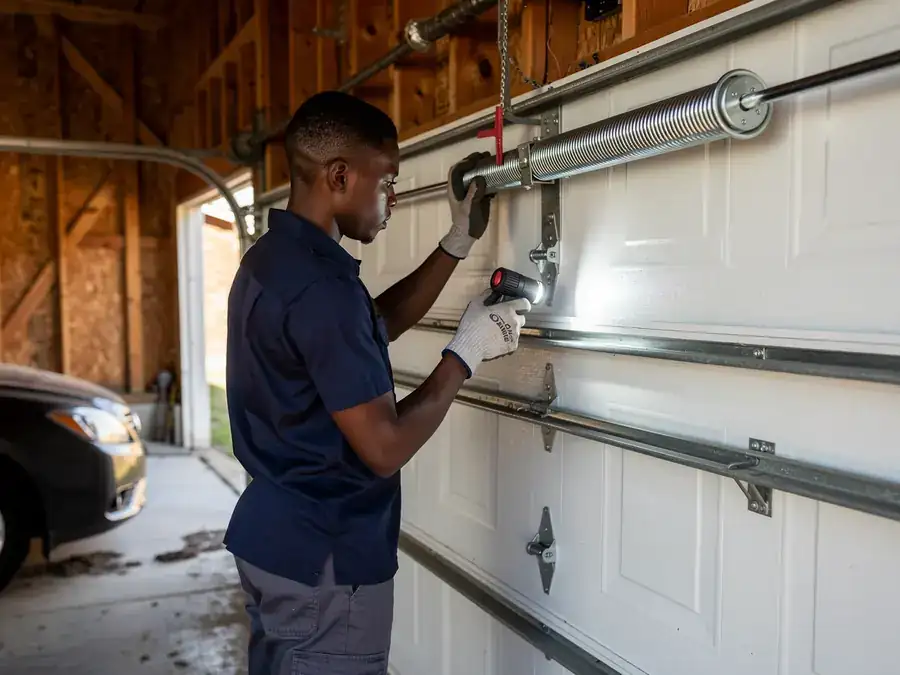
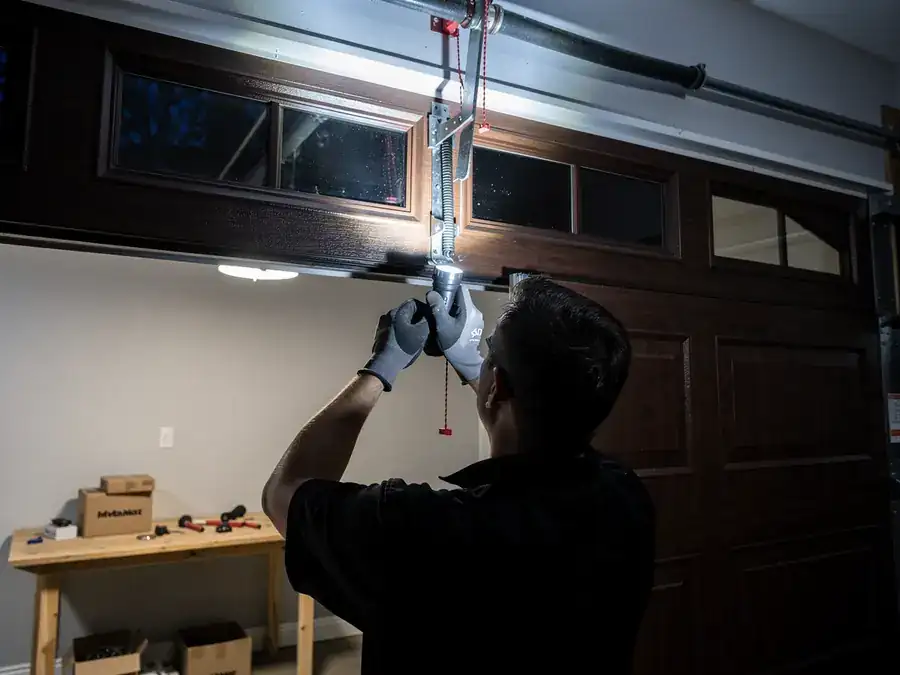
  2. A technician inspects a garage door torsion spring with a flashlight.
    2

    On-site diagnosis

    A technician tests the door under power and by hand and finds what actually failed.

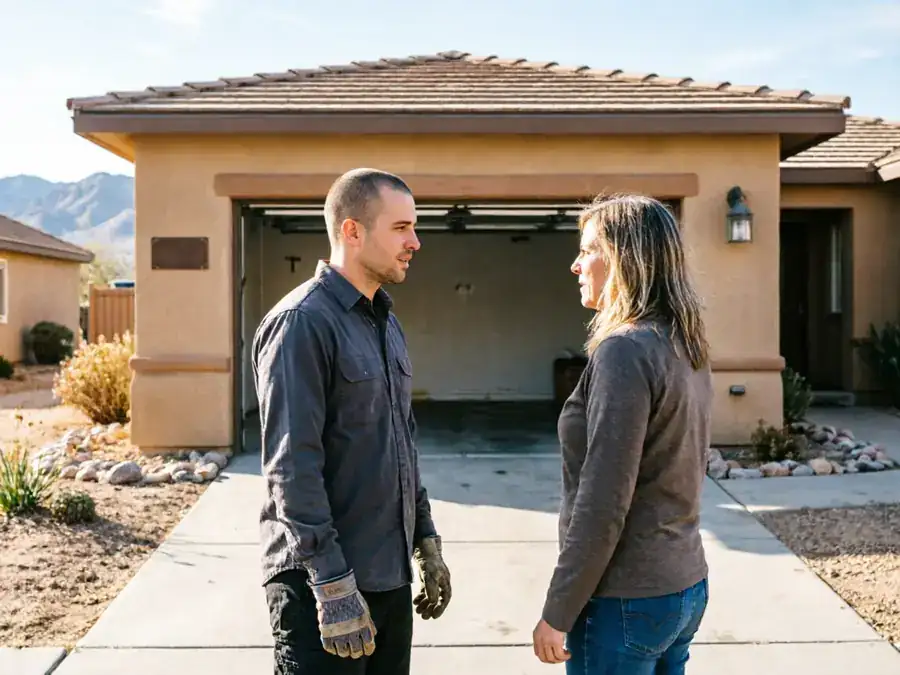
  3. A technician and a woman stand in a driveway in front of a garage.
    3

    Clear, up-front plan

    You get the fix that’s needed and what drives the cost - before any work starts.

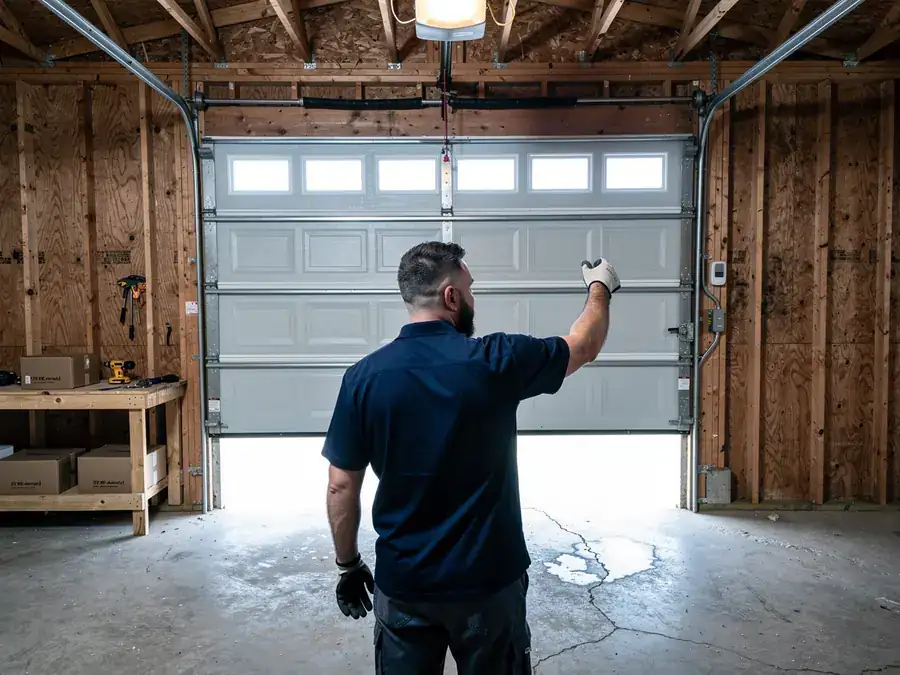
  4. A technician stands in a garage looking at an open garage door.
    4

    Repaired & tested

    The repair is done, the door is set true and tested, and the work area left clean.

Not sure which repair your door needs in Chandler, AZ? Describe what it’s doing - every job starts with a diagnosis.

How we work

What to expect

Diagnosis firstEvery visit starts by finding what actually failed - not a pre-written parts list.
The right part for the doorSprings and openers matched to the door’s weight and age, so the fix holds up.
Straight answersWhen a repair makes more sense than a replacement - or the reverse - you hear it plainly.
Clean, careful workTension released safely, hardware set true, the door tested under power before we leave.
What we do

Garage Door Services

Repair and installation work for Chandler homes and businesses.

Questions

Frequently asked

Straight answers about garage door repair in Chandler. Still unsure? Ask us directly.

My house was built in the early 1990s. Is my garage door original?

It's possible. A lot of homes in this area, including those near were built between 1985 and 1993, and many still have their original door and hardware. If you've never had the spring or rollers replaced, assume it's original and have it checked, especially given how hard the heat here is on uninsulated steel panels.

Will adding insulation to my old door fix the heat problem?

It helps some, but it won't undo thirty years of hardware fatigue or fix a panel that's already warped from heat cycling. If the springs, rollers, or track are already worn, insulating the panel addresses the heat side without touching the mechanical side that's also failing.

Why does my garage door seem louder in summer?

Heat dries out lubricant in the rollers and hinges faster, and on an older non-insulated door the steel expands more during the day, which can make it bind slightly in the track. That combination is a common cause of new noise on doors from the 1985-1993 era in this climate.

Ready to get your garage door sorted?

Tell us what it’s doing and where you are in Chandler - we’ll take it from there.

Request a QuoteCall