Opener Repair for Apache Junction's 1990s-Era Garage Doors
Apache Junction's housing dates mostly to 1993, right at the line for photo-eye safety sensors. We diagnose and fix openers here, traveling out from Chandler.
Apache Junction's median household income sits at $58,619, lower than the $63,545 median across the rest of Chandler Garage Door Co's service area. That gap matters here because it changes which repair makes sense. A logic board swap or a new safety sensor pair is a modest bill. A full operator replacement is not, and in a town where incomes run a bit tighter, we try hard not to sell a new unit when the old one just needs a part. If your opener is from the early-to-mid 1990s stock that makes up a lot of this area's housing, parts for the original brand may not exist anymore, and that's when replacement stops being optional. We'll tell you straight which category your job falls into before we start work, not after.
One honest limit: we don't carry every obsolete drive-chain assembly on the truck, and if your opener is a leftover from a builder-grade install that's been discontinued for over a decade, we may need a day to source the part rather than finish same visit.
Doing It Yourself
Reattaching a trolley or resetting travel limits on a chain-drive opener is within reach for a lot of homeowners, and if that's your situation, there's no reason to call anyone. Where DIY gets risky is the safety reversal system. Houses here built around the median year of 1993 land right at the point when federal rule changes made photo-eye sensors and auto-reverse mandatory on new openers. If your house or your opener predates that, you may be working with a system that has no safety reversal at all, and testing or wiring around a safety circuit incorrectly is not a place to learn on the job. We also don't recommend climbing onto an opener housing or disassembling a logic board yourself if you're not sure what you're looking at. If the opener just hums, clicks, or runs but the door won't move, that's often the gears inside the unit, and that's a tear-down job, not an adjustment.
What Causes It Around Here
Heat is the main driver of opener failures in this part of Arizona, and the band here runs severe. Circuit boards and capacitors inside the opener housing take the worst of it, especially units mounted in garages that sit closed and unventilated through peak afternoon hours. We see logic boards fail outright, and we see intermittent faults, an opener that works most days and then refuses to respond to the remote on the hottest ones, which is a thermal issue in the board, not a dead remote battery. Belt and chain drives also stretch and loosen faster under sustained heat cycling than they would in a milder climate, which shows up as grinding or a door that reverses partway for no clear reason. Given the age of a lot of the opener units still running on original installs here, dating back toward that 1993 median build year, we're also just seeing straightforward end-of-life wear: worn-out gear kits, dried lubrication, and drive systems that have simply logged their years.
What the Fix Involves
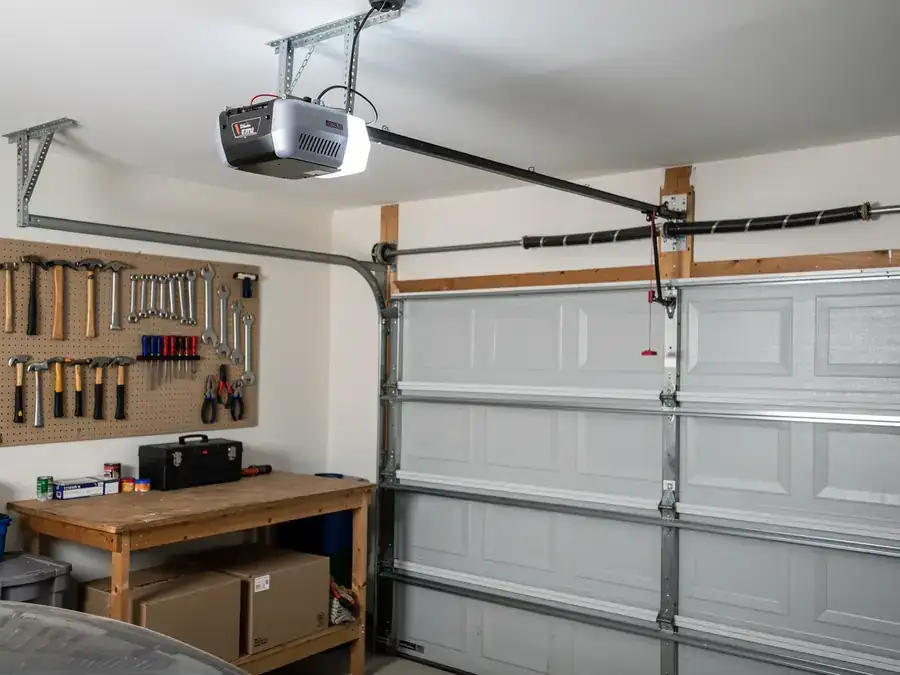
We start by running the opener through its actual symptom rather than guessing: testing the logic board response, checking the photo-eye alignment and wiring if the unit has one, and inspecting the drive gear or belt for wear. On units built to the pre-1993 standard without auto-reverse sensors, we'll flag that directly, since it's a safety gap, not just an inconvenience, and we'll walk you through what bringing the system current involves. Most logic board failures mean a board swap rather than a full unit replacement if the motor and drive are still sound. Worn drive gears, a common failure on chain-drive units from this housing era, get replaced as a kit rather than patched. If photo-eye sensors are misaligned or corroded from heat and dust, that's often a fast fix that resolves what looks like a bigger problem. We test the full cycle, both directions, before we call it done.
How Long It Takes
We travel to Apache Junction from Chandler, about 19 miles out, so this isn't a job we treat as a quick in-and-out without planning the trip. Most straightforward opener repairs, a sensor realignment, a board swap, a gear kit replacement, are a single visit once we're on site and diagnosing the actual fault. Jobs that need a part we don't stock on the truck, which is more likely on an older or discontinued opener brand common in this area's 1990s-era builder installs, may need a second trip once the part arrives. We'd rather tell you that upfront than promise a same-day fix we can't back up from a 19-mile drive.
How it works
From “it’s stuck” to “it’s fixed”
A quick, honest process - no guesswork and no surprises.
1
Tell us what’s wrong
Describe the symptom - won’t open, loud bang, opener runs but the door won’t move.
2
On-site diagnosis
A technician tests the door under power and by hand and finds what actually failed.
3
Clear, up-front plan
You get the fix that’s needed and what drives the cost - before any work starts.
4
Repaired & tested
The repair is done, the door is set true and tested, and the work area left clean.
Not sure which repair your door needs in Chandler, AZ? Describe what it’s doing - every job starts with a diagnosis.
Straight answers about garage door repair in Chandler. Still unsure? Ask us directly.
My garage door opener works but won't auto-reverse when something's in the way. Is that a problem?
Yes. If your opener doesn't stop and reverse when it hits resistance, the safety reversal system isn't working or was never installed, which was common before photo-eye sensors became standard around 1993. This isn't a wait-and-see issue. We can check whether your unit needs sensors added or a full safety circuit repair.
Why does my opener only act up in the afternoon?
That's almost always heat affecting the logic board or capacitors inside the opener housing. In a severe-heat climate like this one, garages that sit closed all day push internal temperatures well past what the board was designed for, and intermittent faults in the hottest hours are the classic symptom.
Is it worth fixing an opener from the early 1990s or should I just replace it?
Depends on what's actually broken. A board or gear kit swap can be worth it if the motor's sound. But parts for original builder-grade units from that era are getting harder to find, and at some point sourcing delays make replacement the more practical call. We'll tell you which side of that line your unit is on.
Do you keep parts on the truck for older opener brands?
We carry parts for common current units, but builder-installed openers from the early 1990s are sometimes a discontinued brand, and those parts aren't always something we stock. If that's your situation, we may need a short follow-up visit once we source the part rather than finishing in one trip.